
Side Dishes
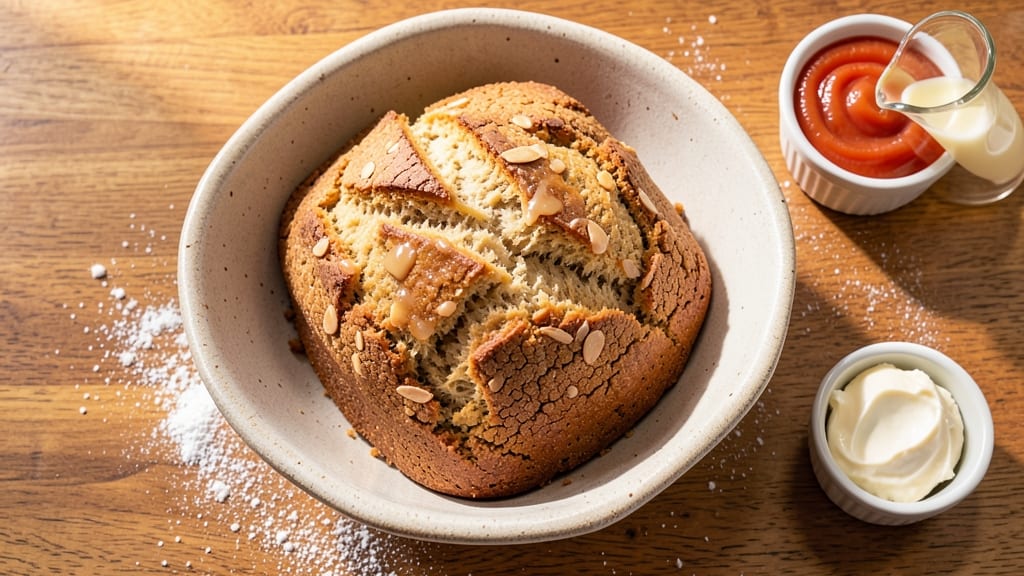
This almond flour bread recipe with xanthan gum delivers the light, airy rise of traditional bread—without a single grain of gluten. The secret lies in that xanthan gum, which binds the crumb and mimics gluten's elasticity, creating a loaf that's tender yet sturdy enough to slice.
I've perfected this recipe over years of gluten-free baking experiments, and it's finally the one that holds its shape without crumbling.
The beauty of this recipe is its simplicity: just 5 key ingredients transform into a golden, fragrant loaf with a crisp crust and moist interior. Unlike many gluten-free breads that turn out dense, this version rises beautifully thanks to the xanthan gum's magic.
The almond flour adds natural sweetness and a delicate nutty flavor that pairs perfectly with butter or jam.
What makes this bread truly special is its versatility—serve it warm with soup, toast it for breakfast, or use it for sandwiches that won't fall apart. The xanthan gum ensures a consistent crumb structure, so every slice looks and tastes like it came from a bakery.
For those without xanthan gum, I'll share a reliable substitute that still delivers great results.
Ready in just 1 hour and 15 minutes with minimal effort, this recipe proves gluten-free baking doesn't have to be complicated. The oven temperature stays steady at 350°F, and the proofing time is minimal, making it perfect for weeknight baking. Let's get started on creating your perfect gluten-free loaf.
Ingredients for almond flour bread recipe xanthan gum
Five simple ingredients transform into a golden, gluten-free loaf with bakery-style texture.
| Ingredient | Amount | Notes |
|---|---|---|
| Almond Flour 🌰 | 2 ½ cups | Finely ground, blanched almonds preferred |
| Xanthan Gum 🧪 | ½ tsp | Ensures proper gluten-free rise |
| Unsweetened Applesauce 🍎 | ½ cup | Replaces eggs for moisture |
| Vegan Butter 🧈 | ½ cup | Melted, full-fat preferred |
| Almond Milk 🥛 | ¾ cup | Unsweetened, room temperature |
| Baking Powder 🍞 | 1 ½ tsp | Aluminum-free preferred |
| Salt 🧂 | ½ tsp | Fine sea salt preferred |
| Maple Syrup 🍯 | 2 tbsp | Pure, grade B preferred |
| Vanilla Extract 🌿 | 1 tsp | Pure vanilla preferred |
Almond flour is the star here—Bob's Red Mill or Anthony's Goods are my go-tos for consistent texture. The xanthan gum is non-negotiable for that perfect rise; Bob's Red Mill sells it in small packets perfect for this recipe. If you're buying almond flour, check the date—it goes rancid fast. Store it in the freezer for longer shelf life. The vanilla extract should be pure; imitation won't give that rich depth. For the almond milk, any unsweetened brand works, but Silk or Califia Farms are widely available and reliable.
No xanthan gum? Psyllium husk powder at double the amount works in a pinch, though the texture will differ slightly. Substituting applesauce? Unsweetened pumpkin puree works 1:1 for moisture. The baking powder must be fresh—if it's over a year old, toss it. For the maple syrup, grade B has more flavor than grade A, but either works. Vanilla extract is optional, but trust me—it makes all the difference. If you're using a different nut flour, reduce the amount by 10% since they pack differently.
This dough keeps in the fridge for 3 days wrapped tightly in plastic. For longer storage, freeze the shaped loaf for up to 3 months. Thaw at room temperature before slicing. The bread tastes best fresh but can be lightly toasted the next day. Slice with a serrated knife for clean cuts—this bread is sturdy but still delicate. Store leftovers in an airtight container to maintain freshness.
Why You'll Love This Recipe
- No-Fuss Mixing: I swear by the almond flour—just blend, add applesauce, and fold. The xanthan gum does all the heavy lifting (no kneading, no stress), and the almond milk keeps it tender without gummy edges.
- Rich But Light: That applesauce swap? It’s the secret—moist but not dense, with a subtle sweetness that pairs perfectly with vegan butter. Honestly, it tastes like a cross between brioche and a scone, but with none of the guilt.
- Weeknight Hero: Slice it for toast, cube it for French toast, or just eat it straight. It’s my go-to when I’ve got zero energy—makes a perfect side for eggs or a quick lunch when I’m starving.
- Budget-Friendly Staple: Almond flour’s pricey upfront, but this recipe stretches far. I make a loaf on Sundays, and it lasts me five days—breakfast, snacks, or even crumbs for baking. (Yes, even on a Tuesday night.)
Step-by-step instructions for almond flour bread with xanthan gum
Here's how to create a light, airy gluten-free loaf that rises beautifully every time.
Mix Dry Ingredients Thoroughly
In a large mixing bowl, whisk together the 2.5 cups almond flour and 0.5 tsp xanthan gum until completely combined. The xanthan gum is crucial here—it mimics gluten's binding properties to create that perfect rise. Sift the mixture lightly to eliminate any lumps, then add the 1.5 tsp baking powder and 0.5 tsp salt. Whisk again until evenly distributed throughout the almond flour.
This step prevents dense pockets in your bread. I like to use a whisk rather than a fork to ensure the xanthan gum disperses completely. The mixture should look uniformly fine with no visible streaks of baking powder or salt remaining.
Combine Wet Ingredients Separately
In a separate medium bowl, melt the 0.5 cup vegan butter in a microwave-safe container for 30-45 seconds or until completely liquid. Let it cool slightly while you prepare the remaining wet ingredients. In the same bowl, add the 0.5 cup unsweetened applesauce, 0.75 cup almond milk, 2 tbsp maple syrup, and 1 tsp vanilla extract. Whisk until smooth and fully incorporated.
The applesauce replaces eggs while adding natural sweetness and moisture. I recommend using room-temperature almond milk to ensure everything blends seamlessly. The mixture should be thick but pourable—if it looks too thin, add an extra tablespoon of almond flour from the dry mixture.
Gradually Combine Wet and Dry Mixtures
With the mixer on low speed, gradually add the wet ingredients to the dry ingredients. Mix for 1-2 minutes until just combined—you should see a thick, sticky dough form that clings to the sides of the bowl. Be careful not to overmix, as this can develop too much gluten-like structure in the almond flour.
Here's the thing—this dough will feel different from traditional bread dough. It's more like a thick batter with a slight resistance when pressed. The texture should be uniform, with no dry spots remaining in the bowl. If it looks too thick, add 1 tablespoon almond milk at a time until it reaches a spreadable consistency.
Shape and Prepare for Baking
Transfer the dough to a lightly greased 9x5-inch loaf pan. Wet your fingers slightly and gently spread the dough evenly, pressing down lightly to remove any air bubbles. The dough should fill the pan completely, reaching about 1 inch below the rim. Spritz the top with a bit of almond milk to create a smooth surface for even browning.
Place the pan in the refrigerator for 30 minutes to allow the dough to firm up slightly. This chilling step prevents excessive spreading in the oven. While it chills, preheat your oven to 350°F and position a rack in the lower-middle position. The oven should be fully preheated before the bread goes in.
Bake to Golden Perfection
Bake the bread for 40-45 minutes until the top is golden brown and a toothpick inserted in the center comes out clean. The bread is done when it springs back slightly when pressed gently in the center. If the top browns too quickly, tent loosely with aluminum foil after 20 minutes to prevent over-browning while allowing the bread to finish cooking.
For best results, I recommend baking the bread on the lower-middle rack. This ensures even heat distribution and prevents the bottom from browning too quickly. The internal temperature should reach 205-210°F when fully done. Remove from the oven and let cool in the pan for 10 minutes before transferring to a wire rack to cool completely.
Pro Tips For Making Almond Flour Bread Recipe Xanthan Gum
- Mix the Xanthan Gum First: I learned this the hard way—dry xanthan gum clumps like crazy when tossed into wet ingredients. Whisk it into the almond milk before adding anything else, then let it sit for 2-3 minutes to fully dissolve. Your bread’s structure depends on this step, and skipping it means a gummy, uneven crumb.
- Use Cold Vegan Butter: This isn’t the prettiest method, but it’s the tastiest. Cream the vegan butter and applesauce together cold—straight from the fridge—and fold it into the dry ingredients last. Warm butter makes the almond flour absorb too much moisture, turning your loaf dense instead of light and tender.
- Don’t Overmix the Batter: After combining everything, stop stirring the moment the almond flour is just incorporated. Overmixing activates the gluten in almond flour (yes, it has a little) and makes the bread tough. A few lumps? Doesn’t matter—your bread will still rise and taste better than if you worked it like dough.
- Bake at 325°F, Not Hotter: I was skeptical until I tried it: almond flour bread burns faster than wheat flour, and high heat ruins the texture. Stick to 325°F for the full bake time—yes, even if the top browns early. If it’s looking golden at 20 minutes, tent it with foil and let the heat work through evenly.
Wine and beer pairings for this dish
Crisp White Wine Pairings
A dry Riesling from Germany or Austria is my go-to pairing for this almond flour bread—its bright acidity and subtle honeyed notes complement the nutty almond flavor beautifully. Look for a Kabinett or Spätlese with a crisp finish.
The slight sweetness in these wines balances the bread's natural sweetness without overpowering it. I love Dr. Loosen Blue Slate Riesling for its perfect balance of fruit and minerality. 🍷
Light Lager Complements
For beer lovers, a crisp pilsner like Heineken or Stella Artois works wonders—the clean, refreshing profile cuts through the richness of the almond butter. The subtle malt sweetness in these beers enhances the bread's natural flavors without competing.
If you prefer something with a bit more character, try a Belgian witbier like Hoegaarden, which adds a citrusy contrast that brightens each bite. 🍺
Fruity Rosé Harmony
A dry rosé with berry undertones—think Provence-style—pairs surprisingly well with this bread. The delicate red fruit flavors in wines like Whispering Angel or Château d'Esclans "Whispering Angel" mirror the subtle sweetness of the maple syrup while the acidity keeps the palate fresh.
This combination is perfect for a light lunch or picnic. 🌸
Coffee or Chai Balance
If you prefer non-alcoholic pairings, a light roast coffee with nutty undertones enhances the almond flavor profile. Try a Colombian or Ethiopian bean for its bright acidity.
Alternatively, a spiced chai tea with cinnamon and cardamom adds warmth that complements the bread's natural sweetness. Both are excellent choices for breakfast or afternoon snacks. ☕
Sweet Sparkling Contrast
For a festive touch, serve this bread with Prosecco or Cava. The effervescence cleanses the palate between bites, while the slight sweetness in these sparkling wines enhances the bread's maple notes.
I recommend La Marca Prosecco for its crisp, refreshing profile. This pairing is ideal for celebrations or special brunches. ✨
Nutrition facts
Frequently asked questions
Why does this almond flour bread recipe need xanthan gum?
Xanthan gum acts as a gluten substitute, providing the elasticity and structure that gluten-free flours lack. It creates that perfect rise and prevents crumbling—without it, your bread would be dense and fall apart when sliced. For this recipe, the 0.5 tsp is crucial for achieving that bakery-style texture.
Can I make this bread without xanthan gum?
Yes! Use 1 tsp psyllium husk powder as a substitute—it mimics xanthan gum's binding properties. Mix it with 2 tbsp water first to form a gel before adding to the wet ingredients. The texture will be slightly denser but still delicious. For best results, don't skip the chilling step before baking.
How do I store this almond flour bread?
Keep it fresh by storing in an airtight container at room temperature for up to 3 days. For longer storage, wrap the cooled loaf tightly in plastic wrap and freeze for up to 3 months. Thaw overnight in the fridge before slicing—microwaving makes it gummy. Slice with a serrated knife for clean cuts.
Why did my bread turn out dense?
Dense bread usually means overmixing or insufficient xanthan gum. Mix just until combined (about 1-2 minutes) and ensure your xanthan gum is fresh. Also check your oven temperature—350°F is critical. If your almond flour is old (over 6 months), it may have lost moisture, making the bread drier.
Can I add seeds or nuts to this recipe?
Stir in 1/4 cup chopped walnuts or 2 tbsp sunflower seeds with the dry ingredients. For extra crunch, toast them first at 350°F for 5 minutes before mixing. Just reduce the almond flour by 1 tbsp to maintain the right consistency.