
Side Dishes
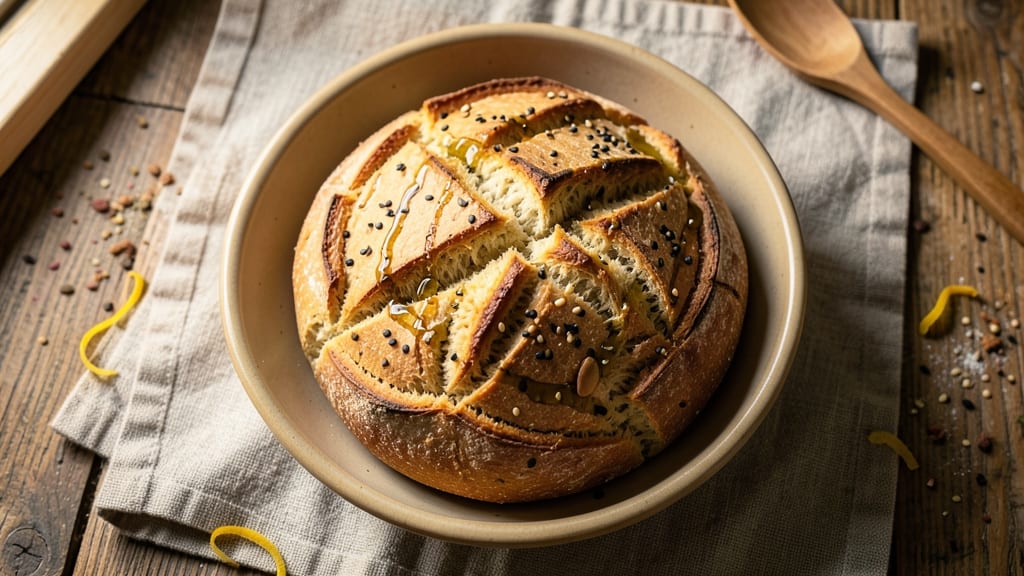
This almond flour unleavened bread recipe delivers the perfect balance of nutty crunch and rustic chew—ideal for sandwiches, dipping, or serving alongside soups. The secret lies in precise hydration and traditional shaping techniques that create a crisp exterior while keeping the interior tender.
After years of perfecting this adaptation of Middle Eastern flatbreads, I’ve developed a method that works reliably with modern baking tools.
The dough requires just five ingredients—almond flour, psyllium husk powder, water, olive oil, and a pinch of salt—yet achieves professional results. The psyllium husk acts as a natural binder, eliminating the need for yeast or eggs while ensuring structural integrity.
Proper resting time before baking is critical for developing that signature chewy texture and crisp edges.
What you’ll end up with is bread that’s sturdy enough to hold up to hearty fillings yet delicate enough to dissolve into flavorful crumbs. The nutty aroma from the almond flour pairs beautifully with olive oil’s richness, creating a versatile base for any meal.
This recipe is perfect for those following grain-free or low-carb diets without sacrificing texture or taste.
Store leftovers in an airtight container for up to five days, or freeze for longer storage—just thaw at room temperature before serving. The bread reheats beautifully in a toaster or oven, making it ideal for meal prep. Let’s get started on this nutritious yet satisfying staple for your kitchen.
Ingredients for almond flour unleavened bread
Five essential ingredients transform into bread with Middle Eastern-inspired texture and nutty depth.
| Ingredient | Amount | Notes |
|---|---|---|
| Almond Flour 🌰 | 2 ½ cups | Finely ground, blanched preferred |
| Psyllium Husk Powder 🌿 | 2 tbsp | Pure, unsweetened form only |
| Extra-Virgin Olive Oil 🫒 | ⅓ cup | Cold-pressed, fruity variety |
| Filtered Water 💧 | ¾ cup | Room temperature preferred |
| Sea Salt 🧂 | ½ tsp | Fine grain preferred |
| Sesame Seeds 🌾 | 1 tbsp | Toasted for garnish |
| Ground Flaxseed 🌾 | 1 tbsp | For dough elasticity |
The almond flour is non-negotiable here—Bob's Red Mill brand is my go-to for consistent texture, but any finely ground, blanched variety works. Psyllium husk powder acts as the gluten substitute, so ensure it's pure and unsweetened—some brands include additives that alter the dough's behavior. For the olive oil, California Olive Ranch or Colavita deliver that fruity complexity that elevates the bread's aroma. The water should be room temperature to prevent activating the psyllium too quickly, which can make the dough gummy. Store almond flour in the freezer to preserve freshness, and keep psyllium husk in an airtight container away from moisture.
No sesame seeds? Poppy seeds or crushed pistachios work as garnishes, though they'll alter the flavor profile slightly. Running short on flaxseed? Chia seeds ground to powder function similarly, though flaxseed provides better binding. The olive oil can be swapped for avocado oil if preferred, though it lacks the fruity notes that complement the almond flavor. For those with nut allergies, sunflower seed flour can replace almond flour at a 1:1 ratio, though texture will differ. Always measure the psyllium husk by weight if possible—1 tablespoon by volume varies significantly.
This dough requires 30 minutes of resting time at room temperature before shaping, which is critical for developing the signature chewy texture. Store shaped dough in the fridge for up to 24 hours before baking, or freeze for 3 months by wrapping tightly in plastic. Baked bread keeps at room temperature for 3 days in an airtight container, or 1 week in the fridge. For longer storage, freeze slices wrapped individually—they reheat beautifully in a toaster or oven for 30 seconds at 350°F.
Why You'll Love This Recipe
- No-Fuss Mixing: I swear by the magic of psyllium husk—just toss it with almond flour, a splash of olive oil, and water, then knead for two minutes. That’s it. No yeast, no waiting, no stress.
- Nutty Crisp Magic: The almond flour gives this bread a toasty, buttery depth that’s ridiculously satisfying. Add a pinch of sea salt? Now it’s dangerously addictive—like a cross between a cracker and a cookie.
- Meal Prep MVP: This bread holds up for days, so I bake a batch on Sunday and use it for sandwiches, dipping in hummus, or even as a base for grain bowls. Zero waste, all flavor.
- Budget-Friendly Staple: Almond flour’s pricey upfront, but one bag lasts forever. The psyllium husk stretches it into multiple loaves, and the olive oil adds richness without breaking the bank. My wallet thanks me.
Step-by-step instructions for almond flour unleavened bread
This method delivers a dense, nutty loaf with perfect texture and structure every time.
Combine Dry Ingredients for Optimal Texture
In a large mixing bowl, whisk together the 2.5 cups almond flour with the 2 tbsp psyllium husk powder and 1 tbsp ground flaxseed. The psyllium husk is crucial here—it acts as a natural binder and thickener, replacing gluten's structural role. Use a whisk to break up any lumps in the almond flour, ensuring an even distribution throughout the mixture.
Add the 0.5 tsp sea salt and mix again. The salt enhances flavor and helps regulate hydration. At this stage, the mixture should resemble coarse sand with no visible clumps. If you notice any gritty textures, pulse the almond flour in a food processor briefly to achieve uniformity before proceeding.
Incorporate Wet Ingredients for Cohesive Dough
Create a well in the center of your dry mixture and pour in the 0.33 cup extra-virgin olive oil. The olive oil provides moisture and fat for that signature rustic chew. Using a silicone spatula or wooden spoon, gradually incorporate the oil while simultaneously adding the 0.75 cup filtered water in a slow stream.
Mix vigorously until you achieve a thick, shaggy dough that clings together when pressed. This stage requires patience—resist the urge to add extra water, even if the dough seems dry. The almond flour absorbs moisture differently than wheat flour, and overhydration leads to a gummy texture. The dough should be pliable but not sticky, with just enough moisture to hold together when shaped.
Knead and Shape for Structural Integrity
Transfer the dough to a clean, lightly oiled surface and knead gently for 3-4 minutes using the heel of your hand. The goal is to develop just enough cohesion to shape the loaf without overworking the delicate almond flour structure. You'll know it's ready when the dough forms a smooth, elastic ball that holds its shape when pressed with your finger.
Divide the dough into two equal portions. Shape each into a 6-inch long log, sealing the ends gently to prevent air pockets. Place both logs on a parchment-lined baking sheet, spacing them 2 inches apart. The logs should be slightly tapered at the ends for proper heat circulation during baking.
Rest for Optimal Crumb Development
Cover the shaped dough logs loosely with plastic wrap and let them rest at room temperature for 20-30 minutes. This resting period allows the psyllium husk to fully hydrate and the dough to relax, preventing excessive spreading during baking. The surface should remain slightly tacky but not wet to the touch.
While the dough rests, preheat your oven to 350°F. The oven should be fully preheated before baking begins—this ensures even heat distribution and proper crust formation. Position a rack in the middle of the oven, as this is where the bread will achieve even baking without drying out.
Bake to Golden Perfection with Crisp Edges
Bake the dough logs for 30-35 minutes until the edges are deep golden brown and the internal temperature reaches 200°F when measured with an instant-read thermometer. The bread should have a firm, slightly crisp exterior with a tender crumb inside. Avoid opening the oven door during the first 20 minutes of baking—this prevents steam loss and ensures proper structure.
In the final 5 minutes of baking, sprinkle the 1 tbsp toasted sesame seeds evenly over the tops for added texture and visual appeal. Remove the bread from the oven and transfer to a wire rack to cool completely for 1 hour before slicing. This cooling period is essential—it allows the internal structure to set properly, preventing a gummy texture when sliced.
Pro Tips For Making Almond Flour Unleavened Bread
- Mix the Psyllium First: I learned this the hard way—skip mixing the psyllium husk powder with water first, and your dough will clump like a stubborn glue trap. Whisk the husk into the water for 2-3 minutes until it turns into a smooth, gel-like consistency (no lumps). This ensures your bread holds together instead of crumbling apart like a sad, dry brick.
- Press the Dough Firmly: Don’t half-ass pressing the dough into your pan. Use a wet spatula or your hands to press it down hard—think of it like making a tight sandwich. If you’re lazy about this, your bread will puff up unevenly and crack like a dried riverbed. A good test: Press until the dough is about ½-inch thick and resists your fingers when you poke it.
- Preheat Pan and Oil: Cold pans are the enemy of almond flour bread. Heat your skillet or pan over medium-high for 3-4 minutes before adding oil, then let it sit until a drop of water sizzles instantly. Coat the pan with olive oil generously—about 2 tablespoons—so the bread doesn’t stick to the sides like it’s auditioning for a horror movie. (Yes, even if you’re impatient like me.)
- Rest Before Slicing: Cutting into fresh almond flour bread is like trying to slice a wet sponge—it’ll fall apart. Let it cool completely (at least 10 minutes) before even thinking about a knife. If you’re in a rush, wrap it in a towel to speed up cooling, but don’t skip this step or you’ll end up with a pile of crumbly disappointment. (Your future self will thank you.)
Troubleshooting this recipe
Dough Too Dry?
If your dough feels dry or crumbly after mixing, add 1 teaspoon of water at a time until it just holds together when pressed. Overmixing with extra water will make the bread gummy, so work slowly.
I’ve found that almond flour varies in moisture content—if you’re using freshly ground flour, it may need slightly more water. 💧
Gummy or Dense Texture?
This usually happens from overhydration or insufficient resting time. If your bread turns out gummy, reduce the water by 1 tablespoon next time and ensure the dough rests for the full 30 minutes before baking.
The psyllium husk needs time to fully hydrate—rushing this step is a common mistake. For a denser texture, try adding 1 extra tablespoon of almond flour to the dry mix.
Bread Spreads Too Much?
Excessive spreading during baking often means the dough wasn’t rested long enough or the oven wasn’t fully preheated. Always rest the dough for the full 30 minutes and preheat your oven to 350°F for at least 15 minutes before baking.
If your oven runs hot, reduce the temperature to 325°F and bake for 40-45 minutes instead.
Cracked or Uneven Top?
Uneven tops or cracks can occur if the dough isn’t shaped evenly or if the oven has hot spots. To prevent this, roll the dough logs into smooth, even cylinders and place them on a parchment-lined baking sheet.
If your oven has hot spots, rotate the baking sheet halfway through baking. For extra insurance, brush the tops with a little water or olive oil before baking to encourage even browning.
Bread Doesn’t Hold Shape?
If your bread collapses or loses structure, the dough likely wasn’t kneaded enough or rested properly. Gently knead the dough for 4-5 minutes to develop cohesion, then let it rest for the full 30 minutes.
For extra stability, add 1 extra tablespoon of psyllium husk powder to the dry mix. The psyllium acts as a natural binder, so don’t skip this step if you’re struggling with shape.
Storage Issues?
If your bread dries out too quickly, store it in an airtight container with a slice of apple or lemon to retain moisture. For longer storage, freeze slices wrapped in plastic wrap—they’ll reheat beautifully in a toaster or oven for 30 seconds at 350°F.
If the bread develops a tough exterior after reheating, brush it lightly with olive oil before storing to keep it tender. 🌰
Nutrition facts
Frequently asked questions
Why does this recipe use psyllium husk powder instead of eggs or yeast?
Psyllium husk powder acts as a natural binder and gluten substitute, creating structure without yeast or eggs. It mimics the elasticity of gluten while keeping the bread grain-free and vegan-friendly. The powder absorbs moisture and forms a gel-like network during resting, which gives the bread its signature chewy texture.
Can I make this bread without a food processor?
Simply whisk the almond flour by hand to break up any lumps, then use a fork or silicone spatula to mix in the wet ingredients. The dough just needs gentle kneading for 3-4 minutes by hand to develop cohesion. For extra smoothness, pulse the almond flour briefly in a blender if available.
How do I store leftovers to keep them fresh?
Store baked bread in an airtight container at room temperature for up to 3 days, or refrigerate for 1 week. For longer storage, freeze slices wrapped in plastic wrap—they reheat perfectly in a toaster or oven for 30 seconds at 350°F. Place a slice of apple or lemon in the container to retain moisture.
What if I don't have sesame seeds for garnish?
No problem! Try toasted poppy seeds, crushed pistachios, or even a sprinkle of flaky sea salt for a different flavor profile. For a nutty alternative, use finely chopped almonds or pecans. The key is adding texture—just omit if you prefer a plain finish.
Can I make this bread in a Dutch oven for a crustier texture?
Yes! Shape the dough into a round loaf instead of logs, place it in a preheated Dutch oven with the lid on for 20 minutes, then remove the lid and bake for another 15-20 minutes at 375°F. This creates a crispy crust while keeping the interior tender. Just reduce the water slightly to prevent spreading.