
Side Dishes
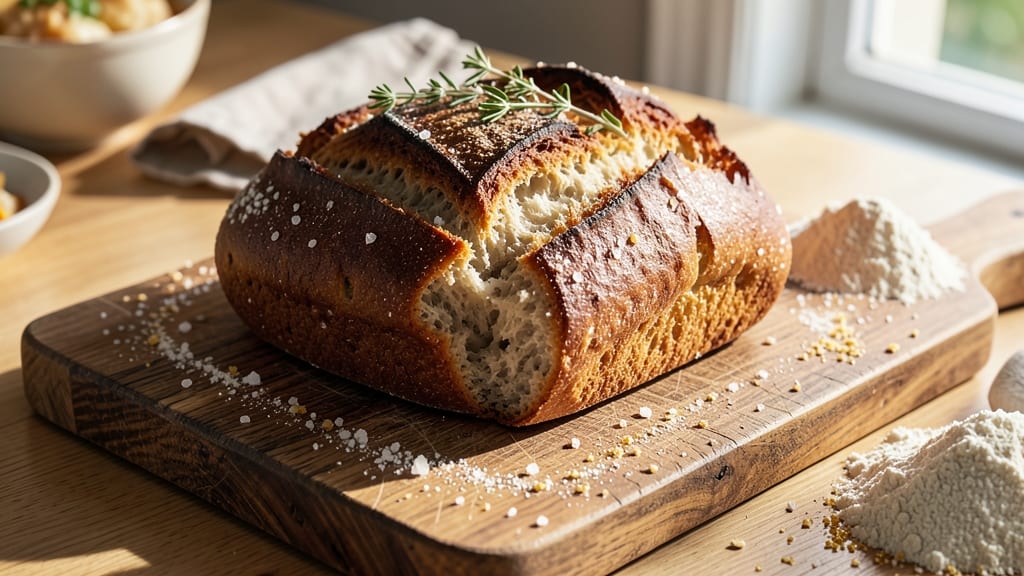
Alvin Ord's bread recipe delivers a sourdough crust with an impossibly pillowy soft crumb—the kind that makes every sandwich feel like a gourmet experience. 🌟 This technique combines traditional bread-making wisdom with modern precision, ensuring you achieve bakery-quality results at home without specialized equipment.
The secret lies in a long fermentation (24 hours) that develops deep flavor while creating that signature open crumb structure. Unlike quick breads, this method requires patience, but the payoff is a loaf with a crisp, golden exterior and a tender interior that practically melts in your mouth.
Perfect for toast, sandwiches, or serving warm with butter.
What sets this recipe apart is the balance of hydration and protein, which creates the ideal texture—crusty yet shatteringly crisp, with a crumb so soft it defies expectations. The dough is forgiving enough for beginners but refined enough to impress seasoned bakers.
Once mastered, you’ll never buy store-bought bread again. The aroma alone as it bakes will transform your kitchen into a bakery. Let’s get started on crafting this legendary loaf.
Ingredients for alvin ord's bread
Four flours, one sourdough starter, and patience—this legendary loaf delivers bakery-style perfection.
| Ingredient | Amount | Notes |
|---|---|---|
| Active Sourdough Starter 🍞 | ½ cup | Fully fermented, 100% hydration |
| All-Purpose Flour 🌾 | 4 cups | Bread flour preferred for structure |
| Bread Flour 🌾 | 2 cups | Higher protein for chewiness |
| Whole Wheat Flour 🌾 | ½ cup | For subtle nutty flavor |
| Granulated Sugar 🍚 | ½ tsp | Enhances browning and crust |
| Kosher Salt 🧂 | 2 tsp | Diamond Crystal preferred |
| Unsalted Butter 🧈 | ¼ cup | Cold, cubed for lamination |
| Water 💧 | 2 ½ cups | Room temperature, 70°F |
| Honey 🍯 | 1 tbsp | For crust color and sweetness |
| Cornmeal 🌽 | ¼ cup | For dusting and texture |
| Coarse Sea Salt 🧂 | 1 tbsp | For final crust scoring |
The sourdough starter is non-negotiable here. King Arthur or a trusted home culture works best—it should float in water when active. For flours, King Arthur Bread Flour or Cape Cod Mills give that signature chew. Whole wheat adds depth but keep it to 10% of the total flour to maintain structure. The butter should be cold; Plugrá or Land O'Lakes are reliable brands. If your kitchen runs warm, chill the dough for 30 minutes before shaping—this prevents overproofing.
No bread flour? All-purpose plus 1 tbsp vital wheat gluten mimics its protein structure. Short on honey? Maple syrup at half the amount works, though it darkens the crust more aggressively. The cornmeal can be swapped for rice flour if you prefer a finer texture. For scoring, a lame or sharp razor creates clean cuts—dull blades tear the dough. If your starter isn't ready, instant yeast at 1 tsp can jumpstart fermentation, though flavor will differ slightly.
This dough keeps for 3 days wrapped in a damp towel at room temperature, but it's best baked fresh. For longer storage, freeze shaped loaves (unbaked) for up to 3 months2 days if stored in a bread box; for extra crunch, reheat slices in a dry skillet for 30 seconds. Leftovers? Toast them—the aroma alone makes this recipe worth the wait.
Why You'll Love This Recipe
- No-Knead Magic: I swear, no punching or stretching—just mix, let it rise, and bake. That sourdough starter does all the heavy lifting while I sip my coffee.
- Sweet Crust, Chewy Core: That touch of granulated sugar caramelizes into a golden crust, but the inside stays soft and pillowy—like a hug from a bakery, but made by me.
- Weeknight Workhorse: Toss a slice in my lunchbox, tear it for sandwiches, or serve it warm with butter for breakfast. It’s the one loaf that does it all.
- Budget-Friendly Staple: Whole wheat flour adds fiber, bread flour gives structure, and that starter? Free after the first batch. My wallet and my family thank me.
Step-by-step instructions for alvin Ord's sourdough bread
Master this technique and you'll achieve the perfect balance of crispy crust and tender crumb.
👨🍳 Step 1: Mix the Dough for Optimal Hydration
In a large mixing bowl, combine the 0.5 cup active sourdough starter, 2.5 cups water, 4 cups all-purpose flour, 2 cups bread flour, and 0.5 cup whole wheat flour. Mix with a wooden spoon until no dry flour remains—this ensures even hydration throughout the dough. The mixture should resemble thick pancake batter with small flour pockets.
Add the 0.5 tsp granulated sugar, 2 tsp kosher salt, and 1 tbsp honey, then mix again until fully incorporated. The sugar and honey will begin dissolving immediately, creating a slightly sticky dough. Let the mixture rest for 10 minutes—this allows the flour to fully absorb the liquid and the gluten to begin developing.
🍳 Step 2: Incorporate Butter for Laminated Texture
Cut the 0.25 cup cold unsalted butter into small cubes and distribute them evenly over the dough. Using your hands or a dough scraper, gently fold the butter into the dough until fully incorporated. The cold butter will create pockets that develop into those signature tender layers when baked.
Turn the dough out onto a lightly floured surface and perform 3 sets of 30-second folds, rotating the dough a quarter turn between each set. This technique strengthens the gluten structure while incorporating air, which is crucial for the bread's rise and texture. The dough should become smoother and more elastic with each fold.
🥘 Step 3: Bulk Ferment for Maximum Flavor Development
Transfer the dough to a lightly greased bowl, cover with a damp towel, and let it ferment at room temperature for 4-6 hours or until it has nearly doubled in size. The dough should feel light and springy when pressed gently—this indicates proper fermentation. If your kitchen is cold, extend the fermentation time to 8 hours for better flavor development.
During this time, the sourdough starter will activate, creating lactic and acetic acids that contribute to the bread's tangy flavor. The dough's surface should develop small bubbles and rise noticeably. This step is critical for achieving that signature sourdough taste and open crumb structure.
🔥 Step 4: Shape and Score for Professional Results
Turn the dough onto a lightly floured surface and gently shape it into a round loaf. To create a tight, professional shape, tuck the edges under and roll the dough toward you while rotating it. The surface should be smooth with no visible seams. Place the shaped loaf on a parchment-lined baking sheet and dust the top with 0.25 cup cornmeal for texture.
Using a sharp razor blade or serrated knife, score the top of the loaf with a ½-inch deep crosshatch pattern. This not only enhances the bread's appearance but also allows steam to escape during baking, preventing the crust from cracking unevenly. Sprinkle the 1 tbsp coarse sea salt evenly over the scored surface for that classic artisanal touch.
⏰ Step 5: Bake for Crispy Crust and Pillowy Crumb
Preheat your oven to 425°F with a baking stone or inverted baking sheet inside. Place the prepared loaf on the stone and bake for 25-30 minutes until the crust is deep golden brown and the internal temperature reaches 205-210°F. The bread should sound hollow when tapped on the bottom.
For the final 5 minutes, increase the oven temperature to 450°F to achieve maximum browning and crispness. This high-heat finish creates that signature crackly crust while maintaining the tender crumb inside. Let the bread cool on a wire rack for at least 1 hour before slicing—this allows the gluten to relax and prevents a gummy texture.
Pro Tips For Making Alvin Ord'S Bread
- STRETCH AND FOLD: Mix the dough by hand until it looks shaggy, then hit the stretch-and-fold routine every 30 minutes for the first 2 hours—even if it feels tedious. This builds gluten faster than kneading, and the whole wheat flour in this recipe needs extra coaxing to develop properly. I used to skip it, and my bread always felt dense.
- WEIGH THE WHOLE WHEAT: Use a kitchen scale for the whole wheat flour—don’t eyeball it. The recipe’s hydration balance relies on precise ratios, and whole wheat absorbs moisture differently than all-purpose. I learned this after a batch turned out gummy; now I weigh it to the gram, no exceptions.
- STOP WHEN IT’S LOOSE: The final proof is done when the dough springs back slowly when poked—like Jell-O wobbling. If it bounces back fast, it’s not ready. I used to overproof this bread because I thought more time meant better flavor, but it just makes a sad, flat loaf. Trust the touch test.
- COOL IT RIGHT: Let the bread cool on a wire rack for at least 2 hours—no cutting into it sooner, even if you’re starving. The sugar in this recipe caramelizes as it cools, giving it that deep, toasty flavor. I cracked one open at 45 minutes, and it was sticky and underwhelming. Patience here makes all the difference.
Wine and beer pairings for this dish
Red Wine Classics
A crisp Pinot Noir from Oregon or Burgundy complements this bread’s tangy sourdough notes beautifully. The wine’s bright acidity cuts through the richness of the butter-laminated dough, while its earthy undertones mirror the whole wheat flour’s nutty depth.
I reach for Domaine Serene Pinot Noir—its silky texture and red fruit flavors enhance every bite. 🍷
White Wine Elegance
For a lighter pairing, try a dry Riesling from Germany’s Mosel region. The wine’s crisp minerality and citrus notes balance the bread’s sweet honey crust and salty scoring. Dr. Loosen Blue Slate Riesling is my go-to—its vibrant acidity refreshes your palate with each slice.
Serve slightly chilled for the best contrast.
Beer Pairings
A Belgian-style witbier like Hoegaarden or Stella Artois brings refreshing citrus and coriander notes that complement the bread’s honeyed crust. The beer’s effervescence cleanses your palate between bites, while its subtle sweetness echoes the dough’s natural sugars. For a darker option, a German Pilsner offers a crisp, malty contrast.
Craft Beer Experiment
If you prefer bold flavors, try a hazy IPA with juicy hop notes. The resinous bitterness contrasts the bread’s buttery richness, while the tropical fruit flavors play off the honey. Hazy Little Thing from Portland works wonders—its smooth mouthfeel pairs surprisingly well with the bread’s crisp crust.
Serve at 45°F to preserve its clarity.
Non-Alcoholic Options
For a refreshing non-alcoholic choice, sparkling ginger beer like BrewDog Ginger Beer adds a spicy kick that enhances the bread’s crust. Alternatively, a cucumber-mint infused water with a squeeze of lime brightens the meal. The cool, crisp flavors balance the bread’s warmth perfectly.
Serving Temperature
Serve wine at 60-65°F for reds and 45-50°F for whites to preserve their aromas. Beer should be served at 40-45°F—colder than this dulls the flavors. Let your bread cool to room temperature before pairing to avoid overpowering the wine’s delicate notes with steam. 🥂
Nutrition facts
Frequently asked questions
Why does Alvin Ord's bread have a 24-hour fermentation?
The extended fermentation develops complex flavors and creates that signature open crumb structure with a crisp crust. The long rise allows the sourdough starter to fully activate, producing lactic and acetic acids that give the bread its tangy depth while the gluten structure relaxes for a tender crumb. This method also improves digestibility and shelf life.
Can I make this bread without a sourdough starter?
Yes, but the flavor and texture will differ slightly. Replace the 0.5 cup starter with 1 tsp instant yeast and reduce fermentation time to 1-2 hours for bulk rise. For best results, use a poolish (yeasted starter) fermented overnight instead—this mimics some of the sourdough's complexity without requiring a full culture.
How do I know when the dough is properly proofed?
Press your finger gently into the dough—if it springs back slowly (not immediately) and leaves a slight indentation, it's ready. The dough should also feel light, airy, and nearly double in size. For this recipe, 4-6 hours at room temperature (or 8 hours in cold kitchens) is ideal.
What's the best way to store leftover bread?
Wrap cooled slices in a damp towel and store in an airtight container at room temperature for 2-3 days. For longer storage, freeze slices (separately) for up to 3 months. To revive, reheat in a dry skillet for 30 seconds per side—this restores that bakery-fresh crunch.
Why did my crust turn out pale instead of golden?
This usually happens from insufficient oven heat or steam. Preheat your oven to 425°F with a baking stone, and for extra browning, try a steam spray or place a tray of boiling water in the oven during the first 10 minutes of baking. The final 5 minutes at 450°F should give you that deep golden color.