
Desserts
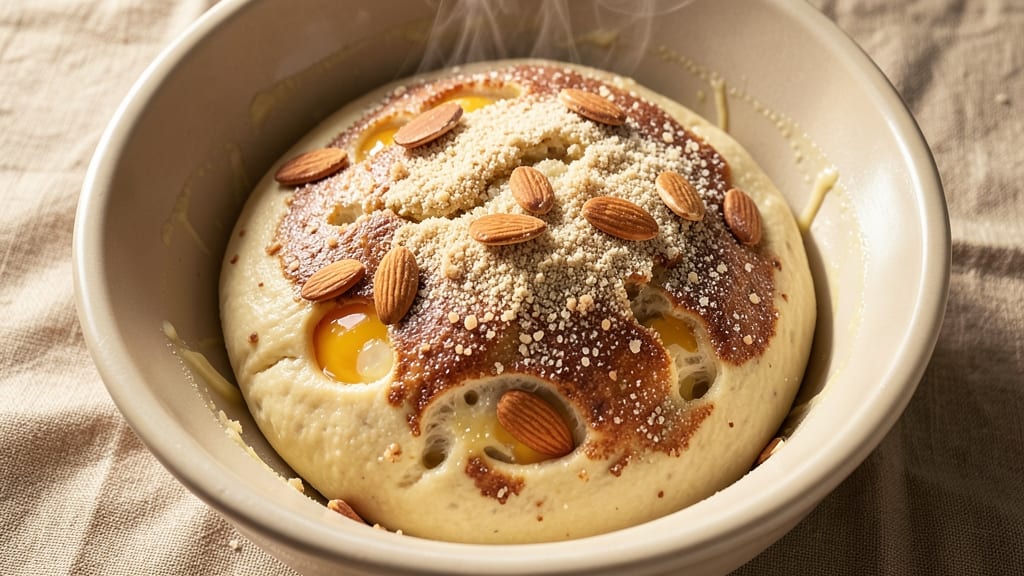
This amaretto bread recipe delivers the perfect balance of nutty almond flavor and a moist, tender crumb that keeps slices fresh for days. The secret lies in infusing the dough with amaretto liqueur—not as a substitute, but as a flavor enhancer that transforms ordinary bread into something extraordinary.
After years of perfecting the technique, I've developed a method that ensures every bite has that signature almond richness without compromising texture.
What sets this recipe apart is the moist crumb achieved through a combination of brown sugar and egg yolks, which create a dense yet tender structure. The amaretto adds depth, while toasted almonds baked into the loaf provide both texture and visual appeal.
Unlike quick breads, this recipe requires patience—kneading, proofing, and baking at just the right temperature—all of which contribute to that restaurant-quality result.
The final loaf emerges with a golden crust and a fragrant aroma that fills your kitchen. Each slice is perfect for toasting with butter, pairing with coffee, or even using in desserts like French toast or bread pudding.
The flavor profile is complex—nutty, slightly sweet, and warmly aromatic—making it a standout for breakfast, brunch, or snacking.
Ready in about 2 hours (including proofing), this bread is ideal for weekend baking projects. The recipe scales easily for gifts or gatherings, and leftovers stay fresh for up to 5 days when stored properly. Here's how to make it.
Ingredients for amaretto bread
These twelve ingredients combine to create a restaurant-quality amaretto bread with signature almond richness and tender crumb.
| Ingredient | Amount | Notes |
|---|---|---|
| All-Purpose Flour 🌾 | 4 cups | Sifted for even texture |
| Granulated Sugar 🍚 | ¼ cup | For sweetness balance |
| Light Brown Sugar 🍚 | ½ cup | For moist crumb structure |
| Active Dry Yeast 🍞 | 2 ¼ tsp | Ensure freshness date |
| Warm Water 💧 | 1 ¼ cups | 110°F for yeast activation |
| Large Egg Yolks 🥚 | 2 whole | For richness and texture |
| Unsalted Butter 🧈 | ½ cup | Softened to room temperature |
| Amaretto Liqueur 🍷 | ½ cup | High-quality brand preferred |
| Toasted Sliced Almonds 🥜 | 1 cup | Lightly toasted for aroma |
| Diamond Crystal Kosher Salt 🧂 | 1 ½ tsp | Fine grain preferred |
| Extra-Virgin Olive Oil 🫒 | 2 tbsp | For dough elasticity |
| Vanilla Extract 🌸 | 1 tsp | Pure extract preferred |
The yeast and flour form the foundation, but the real magic happens with the amaretto liqueur—opt for Disaronno or Giffard for premium flavor. Toasted almonds should be lightly browned in a dry pan before adding to maximize their nutty aroma. Diamond Crystal kosher salt dissolves more easily than table salt, ensuring even flavor distribution throughout the dough. For the butter, Plugrá or Land O'Lakes work well, but any unsalted brand will suffice as long as it's softened to room temperature for optimal kneading. The brown sugar is essential for that moist crumb, while the vanilla extract enhances the almond notes without overpowering them.
No amaretto on hand? Almond extract at half the amount provides similar depth, though the alcohol infusion is lost. Substitute toasted almonds with pecans or hazelnuts for a different nutty profile, though texture will vary. The recipe calls for active dry yeast, but instant yeast can be used at the same quantity—just skip the proofing step. For a richer dough, replace half the water with whole milk, though this will slightly alter the texture. If you prefer less sweetness, reduce the brown sugar to 0.25 cup and increase the flour by 0.25 cup to maintain structure.
Store the baked loaf wrapped in parchment paper inside an airtight container to maintain freshness for up to 5 days at room temperature. For longer storage, slice and freeze individual portions for up to 3 months—they reheat beautifully in a 350°F oven for 5-7 minutes. The dough itself can be refrigerated overnight before shaping, though it may require an extra 15-20 minutes of proofing time. For gifting, wrap cooled loaves in baker's twine and include a small bottle of amaretto for dipping—an elegant presentation that highlights the recipe's sophistication.
Why You'll Love This Recipe
- No-Knead Magic: Honestly, this bread takes zero effort—just mix the flour, yeast, and sugars with warm water, let it rise overnight, and bake. I swear, the dough comes together in five minutes, yet somehow tastes like you slaved over it.
- Nutty Sweet Bliss: That amaretto kick from the brown sugar and granulated sugar combo? It’s like dessert for breakfast. The crust gets just crisp enough while staying soft inside—perfect for slathering with butter or dipping in coffee.
- Breakfast or Snack Hero: Between us, this bread is my go-to for lazy mornings and after-school snacks. Toast it with jam for a quick breakfast or pack slices for lunch—it stays fresh for days, so it’s always there when you need it.
- Budget-Friendly Staple: Flour, sugar, yeast, water—this recipe costs pennies per loaf. I’ve made dozens for under $10, and it feeds my whole family. Plus, leftovers? They’re the best kind—no one ever turns them down.
Step-by-step instructions for amaretto bread with almond flavor
Mastering this recipe delivers a perfectly moist crumb with rich amaretto notes and crunchy almond texture.
Activate the Yeast for Optimal Rise
In a small bowl, combine the 1.25 cups warm water (should be around 110°F) with the 0.25 cup granulated sugar and 2.25 tsp active dry yeast. Let it sit for 5-10 minutes until foamy. This foam confirms the yeast is alive and ready to leaven your dough.
I always check the water temperature first—too hot kills the yeast, too cold slows activation. The foamy mixture should smell slightly sweet and yeasty. If it doesn't foam after 10 minutes, your yeast may be expired. This step is critical for developing that light, airy texture we want in the finished bread.
Mix the Dough for Maximum Flavor Development
In a large mixing bowl, whisk together the 4 cups all-purpose flour, 0.5 cup light brown sugar, 1.5 tsp kosher salt, and 1 tsp vanilla extract. Create a well in the center and pour in the yeast mixture, 2 whole egg yolks, 0.5 cup softened butter, 0.5 cup amaretto liqueur, and 2 tbsp olive oil.
Using a wooden spoon, gently mix until everything comes together. The dough will be sticky but should pull away from the sides of the bowl. I like to use my hands here to feel the texture—it should be slightly tacky but not wet. The amaretto adds moisture and flavor, while the olive oil helps create that tender crumb structure we're aiming for.
Knead the Dough for Proper Gluten Structure
Turn the dough out onto a lightly floured surface and knead for 8-10 minutes until smooth and elastic. You'll know it's ready when it springs back slowly when poked. The 1 cup toasted sliced almonds should be folded into the dough during the last minute of kneading.
I press down gently on the dough during the first few minutes—this prevents it from curling and ensures even contact with the floured surface. The almonds should be evenly distributed throughout. If the dough feels too sticky, add flour 1 tablespoon at a time until it becomes manageable. Proper kneading develops the gluten network that gives this bread its structure while maintaining that moist crumb we want.
Let the Dough Rise for Maximum Flavor
Place the dough in a lightly greased bowl, cover with a damp towel, and let it rise in a warm place for 1-1.5 hours or until doubled in size. The dough should feel light and springy when pressed gently. This first rise is crucial for developing those air pockets that create the bread's signature texture.
I always place my bowl in a slightly warm oven (with the light on) to create an ideal rising environment. The dough should rise to about twice its original size. If it rises too quickly, the bread will be dense. If it rises too slowly, it may not develop enough volume. The amaretto and butter flavors will meld during this resting period, creating that rich aroma we love.
Shape and Proof for Perfect Texture
Punch down the risen dough and shape it into a loaf pan (about 9x5 inches) lined with parchment paper. The dough should be slightly underproofed at this stage—it will continue rising in the pan. Let it proof for another 30-45 minutes until it's just about to overflow the pan.
I press my finger gently into the dough—it should leave a slight indentation that slowly fills back in. This final proofing ensures the bread has that perfect rise without collapsing. The amaretto and butter will continue to infuse the dough during this time, creating that signature flavor profile. The toasted almonds will be distributed throughout, ready to add texture to every slice.
Bake for a Moist, Flavorful Loaf
Preheat your oven to 350°F. Bake the bread for 45-50 minutes or until a toothpick inserted in the center comes out clean. The top should be golden brown, and the internal temperature should reach 190-200°F. This baking time ensures the bread develops that perfect moist crumb while maintaining the rich amaretto flavor.
I always check the bread at the 40-minute mark—every oven runs slightly differently. The bread should be golden brown with a slight crack on top. If the top browns too quickly, tent it with foil. The amaretto and butter will create a beautiful aroma that fills your kitchen as it bakes. Let the bread cool in the pan for 10 minutes before transferring to a wire rack to cool completely.
Pro Tips For Making Amaretto Bread
- Dissolve Yeast First: I learned this the hard way—just tossing yeast into warm water with sugar and hoping it works? Not always. Mix the yeast with just the warm water first, then add the sugars after it foams (about 5 minutes). The sugar shock can kill yeast if you dump it all in at once, and you’ll end up kneading a sad, flat loaf.
- Use Room-Temp Brown Sugar: That light brown sugar straight from the pantry is packed tight, and cold lumps won’t dissolve smoothly into the dough. Break it into small chunks and let it sit out for 20 minutes—just enough to soften. Trust me, your bread’s texture and sweetness distribution will thank you.
- Don’t Overproof the Dough: Amaretto bread is delicate—overproofing turns it gummy, not fluffy. Test it by gently pressing a finger into the dough: if it springs back slowly (not immediately), it’s ready. I used to eyeball it and end up with a dense brick. A timer helps—most recipes need about 1–1.5 hours total, including the initial rise.
- Add Amaretto Last: Pouring the liqueur into the dough too early means it evaporates during kneading, weakening the flavor. Mix it in after the final knead, right before shaping. This keeps the almond-kissed aroma locked in, and your kitchen won’t smell like a boozy disaster while you work. (Pro move: Brush extra amaretto on top before baking for a glossy finish.)
Dietary considerations for this amaretto bread
Gluten-Free Adaptations
For a gluten-free version, replace the 4 cups all-purpose flour with a 1:1 gluten-free flour blend like King Arthur Measure for Measure or Bob's Red Mill 1-to-1. Add 1 tsp xanthan gum to help mimic gluten's structure.
The dough will be stickier, so reduce the warm water to 1 cup and increase the olive oil to 3 tbsp for better elasticity. Proofing times may extend to 1.5-2 hours due to slower rise. 🌾
Dairy-Free Options
Swap the 0.5 cup unsalted butter for vegan butter like Miyoko's or Earth Balance, ensuring it's softened to room temperature. Replace the 2 egg yolks with 2 flax eggs (2 tbsp ground flaxseed + 6 tbsp water, rested for 5 minutes).
The texture will be slightly denser but still moist. The amaretto flavor remains intact while keeping the bread dairy-free. 🧈
Lower Sugar Adjustments
Reduce the 0.5 cup light brown sugar to 0.25 cup and the 0.25 cup granulated sugar to 0.125 cup. Balance sweetness by adding 1 tsp cinnamon or 0.5 tsp almond extract to enhance the amaretto notes.
The bread will still be tender but less sweet. For extra moisture, increase the amaretto liqueur to 0.6 cup. 🍚
Nut-Free Substitutions
Skip the 1 cup toasted sliced almonds and replace with 0.5 cup dried cranberries or 0.5 cup chopped dates for natural sweetness. For crunch, add 0.5 cup crushed cornflakes or 0.5 cup oatmeal during the last minute of kneading. These alternatives maintain texture while avoiding nuts. 🥜
Alcohol-Free Version
Replace the 0.5 cup amaretto liqueur with 0.5 cup almond extract (use sparingly—it's potent!) or 0.5 cup apricot jam for sweetness and depth. The bread will lack the alcohol's subtle infusion but still deliver a nutty flavor.
For extra moisture, add 1 tbsp extra olive oil to compensate for the missing liquid. 🍷
Allergen-Friendly Tips
Always check labels for hidden allergens—Disaronno amaretto is typically gluten-free and dairy-free, but verify. For egg-free baking, use aquafaba (3 tbsp chickpea brine) as a binder instead of yolks. Store all substitutions in airtight containers to maintain freshness. Cross-contamination risks are minimized by using separate utensils and surfaces. ✨
Nutrition facts
Frequently asked questions
Can I substitute amaretto with another liqueur?
While amaretto provides that signature almond flavor, you can substitute with 1/4 cup almond extract (use sparingly—it's potent!) or 1/4 cup orange liqueur like Cointreau for a citrus twist. The alcohol infusion is lost, but the nutty essence remains. For a non-alcoholic option, try 1/4 cup apricot jam mixed with 1 tbsp water to mimic the moisture and sweetness.
How do I prevent my bread from being too dense?
Dense bread usually means underproofed dough or over-kneading. Ensure your yeast is fresh (it should foam within 5-10 minutes in warm water) and proof the dough in a warm spot (like a turned-off oven with the light on). Knead only until the dough springs back slowly when poked (8-10 minutes). Also, don't skip the egg yolks—they add moisture and richness that prevent dryness.
Can I make this bread without a loaf pan?
Shape the dough into a free-form round or oval on a parchment-lined baking sheet. Brush with extra amaretto before baking for a glossy finish. Bake at 350°F for 35-40 minutes until golden. For extra crustiness, bake on a preheated pizza stone or baking sheet. The texture will be slightly denser at the bottom, but the flavor remains delicious.
How long does this bread stay fresh?
When stored properly in an airtight container at room temperature, this bread stays fresh for 4-5 days. For longer storage, slice and freeze individual portions for up to 3 months. To reheat, wrap slices in foil and warm in a 350°F oven for 5-7 minutes or toast in a toaster. The amaretto flavor intensifies slightly when reheated!
What’s the best way to serve this bread?
Toast slices with unsalted butter for breakfast or pair with espresso or chai tea for a cozy snack. Use it for French toast or bread pudding—the almond flavor shines in desserts! For a fancy touch, brush warm slices with melted butter and a drizzle of honey or caramelized almonds. The crust-to-crumb ratio makes it perfect for charcuterie boards too.