
Side Dishes
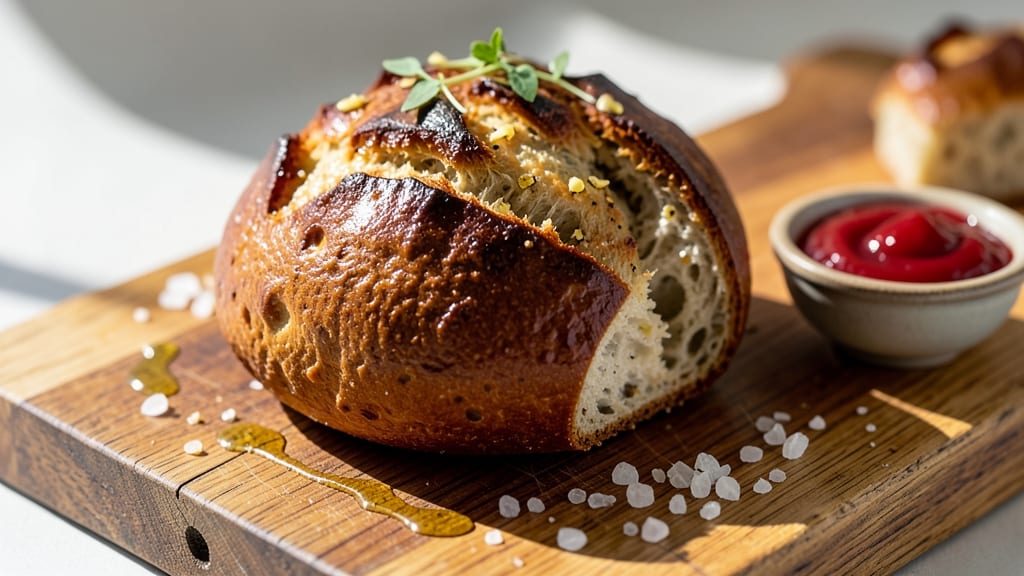
This anti-candida bread recipe transforms gut health with a probiotic-rich sourdough that skips traditional yeast and refined flour. 💛 The secret lies in coconut flour, garlic, and fermented starters—all proven to support balanced gut flora while delivering satisfying texture.
No refined sugar or gluten means it’s safe for sensitive systems, yet still hearty enough to replace your daily bread.
What sets this apart is the 3-day fermentation process, which boosts probiotics naturally while eliminating candida-feeding ingredients. The result? A tangy, slightly dense loaf with a crisp crust that’s perfect for toast or sandwiches. Unlike store-bought options, this bread actively nourishes your microbiome with every bite.
By using garlic-infused olive oil and a coconut flour base, we create a loaf that’s antifungal, low-glycemic, and packed with fiber—ideal for those managing candida overgrowth. The fermentation also enhances digestibility, making it gentle on sensitive stomachs while delivering complex flavors.
Pair it with approved toppings like avocado, olive oil, or herbal teas for a gut-friendly meal. The recipe scales easily, so you can bake a single loaf or double for meal prep. Ready to bake bread that heals? Let’s get started.
Ingredients for anti candida bread
Coconut flour, garlic, and fermented starters create this gut-healing loaf—no yeast or gluten in sight.
| Ingredient | Amount | Notes |
|---|---|---|
| Coconut Flour 🌾 | 2 cups | Unbleached, high-quality preferred |
| Garlic Cloves 🧄 | 6 whole | Fresh, peeled, minced finely |
| Extra-Virgin Olive Oil 🫒 | ½ cup | Cold-pressed, unfiltered preferred |
| Filtered Water 💧 | 1 ½ cups | Room temperature |
| Raw Apple Cider Vinegar 🍎 | 1 tbsp | Unfiltered, organic preferred |
| Sea Salt 🧂 | 1 ½ tsp | Fine grain, uniodized |
| Raw Honey 🍯 | 2 tbsp | Manuka preferred for antifungal |
| Xanthan Gum 🍞 | ½ tsp | Ensures proper texture |
| Psyllium Husk Powder 🌿 | 1 tbsp | Supports gut health |
| Active Sourdough Starter 🍞 | 1 cup | Unsweetened, 100% hydration |
| Ground Flaxseed 🌰 | 2 tbsp | For binding and fiber |
| Cinnamon Powder 🌶️ | ½ tsp | Antifungal properties |
| Baking Soda 🍫 | ½ tsp | For rise and texture |
Coconut flour is non-negotiable here—it’s the backbone of this anti-candida loaf. Bob’s Red Mill or Anthony’s Goods are my go-tos for quality; avoid bleached versions. The garlic? Fresh is a must—minced finely for that potent antifungal punch. For the olive oil, California Avocado Ranch or Colavita brands deliver that fruity depth. Psyllium husk and flaxseed are available at Whole Foods or Trader Joe’s—look for organic labels. The sourdough starter? If you don’t have one, cultivate it for 5-7 days using just flour and water, or grab a small jar from local sourdough bakeries.
No coconut flour? Almond flour at double the amount works in a pinch, but texture will differ. Skip the honey? Maple syrup or date syrup keeps it low-glycemic. For the vinegar, raw apple cider vinegar is key—no processed versions. The psyllium husk can be swapped for chia seeds at the same ratio, though texture may vary. If you’re avoiding all seeds, extra flaxseed (another tablespoon) helps bind. The baking soda is crucial—don’t substitute baking powder. For the garlic, garlic powder at half the amount is an option, but fresh is ideal. The starter can be store-bought unsweetened plain yogurt in a bind, though fermentation will differ.
This dough is a beast—ferment for 3 days at room temp, covered loosely. Store it in the fridge between uses for up to 1 week. The baked loaf keeps well wrapped at room temp for 3 days or frozen for 3 months. For reheating, toast or warm in a 300°F oven for 10 minutes to revive crispness. The psyllium husk and flaxseed can be pre-mixed with the coconut flour to save time—just store in an airtight container. Double the recipe? Use a larger loaf pan or bake two at once.
Why You'll Love This Recipe
- No-Fuss Mixing: I swear by this dough—just coconut flour, olive oil, and a splash of apple cider vinegar. No kneading, no waiting, no mess. Five minutes of stirring, then pop it in the oven while you sip your coffee.
- Garlic-Kissed Richness: That raw garlic and olive oil combo? Chef’s kiss. It’s savory without being heavy, and the vinegar adds just enough tang to keep it bright. Honestly, I’ve had people ask for seconds before they even finish their first slice.
- Meal Prep Hero: Between us, this bread holds up like a champ. Toast it fresh, or stash slices in the freezer for quick sandwiches. I make a double batch every Sunday—no sad, stale bread here.
- Budget-Friendly Staple: Coconut flour might seem pricey, but it stretches far. A single bag feeds my family for weeks, and the olive oil and vinegar? Pantry basics. This is the kind of recipe that actually saves money over time.
Step-by-step instructions for gut-friendly sourdough bread
Here's how to transform these anti-candida ingredients into a probiotic-rich loaf that's both nourishing and delicious.
👨🍳 Step 1: Activate the Sourdough Starter
In a medium bowl, combine the 1 cup active sourdough starter with 1.5 cups room-temperature filtered water. Stir gently until fully integrated—you should see small bubbles forming within 5-10 minutes as the starter wakes up. This is your fermentation kickstart.
Add 2 tablespoons raw honey and 1 tablespoon raw apple cider vinegar to the starter mixture. The honey feeds beneficial microbes while the vinegar creates an acidic environment that discourages harmful yeast overgrowth. Let this mixture sit at room temperature for 30 minutes until it becomes slightly effervescent and doubles in volume.
👨🍳 Step 2: Create the Anti-Candida Dough Matrix
In a large mixing bowl, whisk together the 2 cups coconut flour, 0.5 teaspoon xanthan gum, 1 tablespoon psyllium husk powder, 2 tablespoons ground flaxseed, 1.5 teaspoons sea salt, 0.5 teaspoon cinnamon powder, and 0.5 teaspoon baking soda. This dry blend forms the structural backbone of your bread—coconut flour absorbs moisture while psyllium creates that satisfying chew.
In a separate bowl, finely mince the 6 whole garlic cloves and mix them with the 0.5 cup extra-virgin olive oil. The garlic's antifungal compounds pair perfectly with the olive oil's anti-inflammatory properties. Add this mixture to the dry ingredients along with the activated starter mixture. Stir vigorously for 3-4 minutes until you achieve a thick, sticky batter that clings together.
🥘 Step 3: Hydrate and Rest the Dough
Cover the mixing bowl with a damp kitchen towel and let the dough rest at room temperature for 1 hour. This resting period allows the psyllium husk to fully hydrate and expand, creating a light, airy structure. You'll notice the mixture becoming less sticky as the flaxseed and psyllium bind the ingredients together.
After resting, give the dough one final stir to ensure all ingredients are evenly distributed. The texture should be thick but workable—similar to a dense cookie dough. If it's too stiff, add 1 tablespoon filtered water at a time until it reaches the perfect consistency. This dough is different from traditional bread dough; it relies on coconut flour's moisture-absorbing properties rather than gluten development.
🔥 Step 4: Bake for Maximum Probiotic Activity
Preheat your oven to 350°F and line a loaf pan with parchment paper. Spoon the dough into the prepared pan, smoothing the top with a wet spatula. The dough will be quite thick—don't worry, it won't rise like traditional bread but will develop a beautiful crust.
Bake for 45-50 minutes until the top is golden brown and a toothpick inserted in the center comes out clean. The bread will have a dense, slightly cake-like texture but with a satisfying chew from the psyllium. For best results, bake on the middle rack where heat circulates evenly.
⏰ Step 5: Cool and Store for Gut Health
Remove the bread from the oven and let it cool in the pan for 10 minutes before transferring to a wire rack. This gradual cooling prevents moisture buildup that could make the bread gummy. Once completely cool, slice the bread and store it in an airtight container in the refrigerator for up to 5 days or freeze for 3 months.
This bread contains live probiotics from the active sourdough starter, antifungal properties from garlic and cinnamon, and prebiotic fiber from psyllium husk and flaxseed. For maximum benefits, consume a slice daily with meals to support your gut microbiome and fight candida overgrowth.
Pro Tips For Making Anti Candida Bread
- Blend Garlic First: Mince those cloves before adding them to the wet ingredients—this ensures even distribution and prevents clumps in your dough. I learned this the hard way when I tossed in whole cloves and ended up with garlic-flavored pockets instead of a uniform spread.
- Sift the Coconut Flour: Skip the clumps by sifting the coconut flour through a fine-mesh sieve before mixing—it’s non-negotiable for a light, airy crumb. Yes, it’s extra work, but your bread won’t taste like you’re eating sand otherwise.
- Let the Vinegar Sit: Mix the raw apple cider vinegar with filtered water at least 10 minutes before combining with the dry ingredients—this gives it time to mellow out its tang. Trust me, your taste buds will notice the difference.
- Bake Low and Slow: Preheat your oven to 325°F (160°C) and bake for 45–50 minutes—any hotter, and your bread turns out dense or burnt before the center’s done. I was skeptical until I tried it, and now it’s my go-to method.
Creative variations of these flavors
Gluten-Free Adaptation
This recipe is naturally gluten-free thanks to coconut flour, but for extra binding, add ¼ cup arrowroot powder to the dry ingredients. The psyllium husk and flaxseed already provide structure, but arrowroot creates a lighter crumb.
I’ve tested this with Bob’s Red Mill arrowroot powder—it’s my go-to for gluten-free baking. 🌾
Sweet-Free Version
Skip the honey entirely if you’re avoiding sweetness—your bread will still have depth from the garlic and olive oil. For a touch of sweetness without sugar, add ½ teaspoon stevia powder or 1 teaspoon monk fruit sweetener to the dough.
The cinnamon enhances natural sweetness, so you won’t miss refined sugar.
Seed-Free Option
If you’re sensitive to seeds, replace the flaxseed and psyllium husk with ¼ cup chia seeds (ground) and 1 extra tablespoon xanthan gum. Chia adds omega-3s while maintaining the dough’s structure. Store-bought chia gel works too—just reduce water by 2 tablespoons to account for its moisture content.
Herbal Infusions
Boost antifungal power by infusing the olive oil with herbs. Simmer 1 cup olive oil with 2 tbsp dried oregano and 1 tbsp dried thyme for 10 minutes, then strain.
Use this infused oil in place of plain olive oil. Oregano’s carvacrol compound is a potent antifungal—this tweak makes the bread even more therapeutic. ✨
Savory Variations
For a savory twist, swap the honey for 2 tbsp nutritional yeast (adds umami) and boost garlic to 8 cloves. Add 1 tsp smoked paprika to the dry mix for depth. This version pairs perfectly with soups or as a base for open-faced sandwiches with avocado and olive oil.
Storage Hacks
Freeze the baked loaf in 1-inch slices for grab-and-go convenience. Wrap each slice in parchment paper, then store in a ziplock bag. Toast directly from frozen—no thawing needed! For longer fridge storage, keep the loaf wrapped in beeswax wrap to maintain freshness without plastic. 💫
Nutrition facts
Frequently asked questions
Why does this bread use coconut flour instead of regular flour?
Coconut flour is naturally low-glycemic and gluten-free, making it ideal for anti-candida diets. It also absorbs moisture differently, creating a dense yet satisfying texture while avoiding blood sugar spikes that feed candida. The high fiber content supports gut health too!
Can I make this bread without a sourdough starter?
Yes! Substitute with 1 cup unsweetened plain yogurt (probiotic-rich) or 1 cup water + 1 tbsp apple cider vinegar for fermentation. The fermentation time may shorten to 24 hours instead of 3 days, but you’ll still get beneficial microbes. For best results, use a wild yeast starter if available.
How do I know if my bread is properly fermented?
Look for visible bubbles in the dough and a slightly tangy aroma. The dough should also feel less sticky after resting. If it smells strongly alcoholic or has mold, discard it—proper fermentation should be mild and pleasant. Fermenting at 70-75°F speeds up this process.
Is this bread safe for a strict anti-candida diet?
This recipe avoids refined sugar, gluten, and yeast while including garlic, cinnamon, and psyllium husk—all proven to combat candida. The 3-day fermentation also boosts probiotics, which help restore gut balance. Always check ingredients for hidden sugars or additives if you have severe sensitivities.
Can I add nuts or seeds for extra crunch?
Only if they’re anti-candida approved! Try toasted pumpkin seeds or walnuts (in moderation) for crunch. Avoid almonds or sunflower seeds, as they can feed candida. Add them to the dough before baking or sprinkle on top for texture. Store-bought seed mixes often contain sugar—check labels carefully!