
Side Dishes
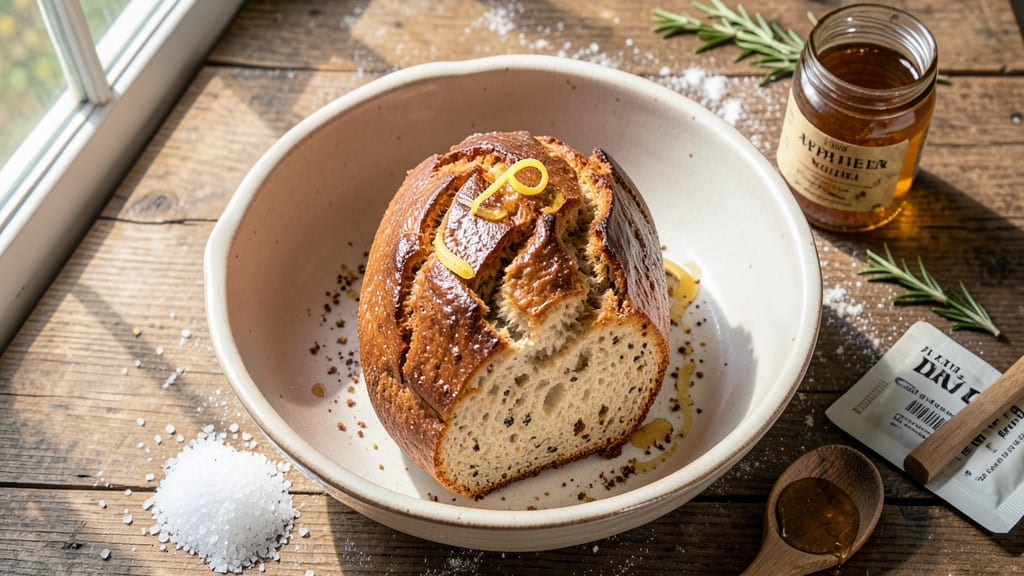
The apple cider vinegar bread recipe transforms ordinary loaves into something extraordinary—crusty gold edges that shatter with every bite, balanced by a tender, apple-spiced crumb. The vinegar isn’t just an ingredient; it’s the secret to that signature tang and airy texture that keeps bread fresh for days.
I’ve perfected this method after years of baking experiments, ensuring no dense, gummy loaves here.
This recipe relies on a simple yet powerful combination: high-gluten flour for structure, apple cider vinegar for tenderness and flavor, and a touch of honey to enhance the apple notes. The dough develops naturally through a slow rise, allowing gluten to relax and flavors to meld.
With just 30 minutes of active time and 2 hours of hands-off rising, you’ll have a loaf that rivals artisanal bakeries without the fuss.
What makes this bread truly special is how the vinegar’s bright acidity cuts through the sweetness of the apple spices, creating a perfect balance. The crust develops a beautiful golden-brown hue with a satisfying crunch, while the interior remains soft and lightly spiced.
This is the kind of bread that disappears from your counter—perfect for toast, sandwiches, or simply enjoyed on its own.
Whether you’re a seasoned baker or just starting out, this recipe delivers restaurant-quality results every time. The key lies in patience during proofing and baking, ensuring the perfect rise and oven spring. Let’s get started on creating your best loaf yet.
Ingredients for apple cider vinegar bread
These 11 ingredients create the perfect balance of tangy, spiced, and airy bread magic.
| Ingredient | Amount | Notes |
|---|---|---|
| High-Gluten Flour 🌾 | 4 cups | Bread flour or King Arthur preferred |
| Apple Cider Vinegar 🍎 | 1 tbsp | Raw, unfiltered for best flavor |
| Active Dry Yeast 🍞 | 2 ¼ tsp | Ensure yeast is fresh |
| Granulated Sugar 🍚 | 1 tbsp | White or brown sugar works |
| Honey 🍯 | 1 tbsp | Wildflower or clover preferred |
| Salt 🧂 | 1 ½ tsp | Fine sea salt preferred |
| Warm Water 💧 | 1 ½ cups | 110°F for optimal yeast activation |
| Apple Pie Spice 🍎 | 1 tsp | Or homemade blend of cinnamon, nutmeg, allspice |
| Cornmeal 🌽 | ½ cup | For dusting bread pan |
| Egg Wash 🥚 | 1 whole | Beaten with 1 tsp water |
| Coarse Sugar 🍚 | 1 tbsp | For sprinkling on top |
The high-gluten flour is non-negotiable here—it gives that signature crispy crust and chewy crumb. King Arthur or Bob's Red Mill are my go-tos, but any bread flour works in a pinch. Apple cider vinegar? Bragg's raw, unfiltered is my favorite—it's got that deep, complex flavor. If you can't find it, white vinegar works but lacks that rich apple taste. The yeast needs to be fresh, so if your packet is more than a few months old, toss it. Warm water is key—too hot kills the yeast, too cold and it won't activate. I always check the temperature with a kitchen thermometer to be sure.
No apple pie spice? Mix 0.5 tsp cinnamon, 0.25 tsp nutmeg, and 0.125 tsp allspice—it's a game-changer. Honey adds that subtle sweetness that balances the vinegar's tang. Wildflower or clover honey has more depth, but any will do. The egg wash isn't just for looks—it gives that gorgeous golden crust. For a vegan version, use plant-based milk with a little oil. And that coarse sugar on top? Don't skip it—it caramelizes beautifully and adds that satisfying crunch. If you're in a hurry, you can use a bread machine setting, but the slow rise makes all the difference in texture.
This dough is a patient's game—let it rise until it's nearly doubled, then give it another hour to develop flavor. Room temperature is ideal for rising, but if it's cold, a slightly warmer spot works. The bread keeps best in a paper bag at room temperature for 2-3 days, staying fresh longer than store-bought. For longer storage, freeze slices wrapped in parchment—just toast straight from frozen. The crust gets even better the next day, so make extra if you can. Trust me, you'll want seconds.
Why You'll Love This Recipe
- No-Knead Magic: The high-gluten flour does all the work—just mix, let it rise, and bake. I swear, my dough never gets stickier than my hands after this.
- Tangy Sweet Crunch: That apple cider vinegar gives it a bright, almost caramelized bite, while the honey keeps it rich. Honestly, the first slice makes me forget store-bought bread exists.
- Lunchbox Hero: Slices perfectly for sandwiches, but it’s also my go-to for toast or French toast. Between us, my kids beg for it at school—yes, even on a Tuesday.
- Budget Bread Wins: A single batch feeds my family for days, and the ingredients cost less than half of what I’d spend on a loaf. Plus, the yeast and vinegar stretch every dollar.
Step-by-step instructions for apple cider vinegar bread
Here's how to craft that perfect loaf with golden crust and tender crumb.
Activate the Yeast for Maximum Rise
In a small bowl, combine the 1.5 cups warm water (about 110°F), 1 tbsp granulated sugar, and 2.25 tsp active dry yeast. Stir gently and let sit for 5-10 minutes until frothy. You'll know it's ready when bubbles form on top and fill the bowl—this means your yeast is alive and ready to work its magic.
While waiting, mix the 1 tbsp apple cider vinegar and 1 tbsp honey in a separate small bowl. The vinegar adds tang while the honey feeds the yeast for a better rise. Add this mixture to the yeast water and stir well. The acidity from the vinegar helps develop gluten for that perfect chewy texture we're after.
Combine Wet and Dry Ingredients
In a large mixing bowl, whisk together the 4 cups high-gluten flour, 1.5 tsp salt, and 1 tsp apple pie spice. Create a well in the center and pour in the yeast mixture. Using a wooden spoon or dough whisk, gradually incorporate the flour into the wet ingredients until a shaggy dough forms.
Once the dough comes together, turn it out onto a lightly floured surface and knead for 8-10 minutes until smooth and elastic. You'll know it's ready when it springs back slowly when poked. The high-gluten flour gives us that beautiful structure, while the apple pie spice adds warm autumnal flavor throughout the crumb.
Let the Dough Rest and Rise
Place the dough in a lightly greased bowl, cover with a damp kitchen towel, and let rise in a warm place for 1-2 hours or until doubled in size. The vinegar helps create a more open crumb, so we want plenty of time for the gluten to relax and develop. When the dough reaches the top of the bowl, it's ready for shaping.
Punch down the dough gently to release air bubbles, then shape into a round loaf. Place it seam-side up in a 9x5-inch loaf pan that's been lightly dusted with 0.5 cup cornmeal. The cornmeal prevents sticking and adds a subtle crunch to the bottom crust. Let it rise again for 30-45 minutes while you preheat your oven to 375°F.
Bake to Golden Perfection
Brush the top of the dough with the 1 whole egg wash (beaten with 1 tsp water) and sprinkle generously with 1 tbsp coarse sugar. This creates that beautiful golden crust we all love. Bake for 35-40 minutes until the bread is deep golden brown and sounds hollow when tapped on the bottom.
For extra crispiness, place the hot loaf on a wire rack and let it cool for 10 minutes before removing from the pan. The sugar caramelizes beautifully during baking, giving us that perfect balance of sweet and tangy flavors. Slice while still slightly warm for the best texture—each bite should be soft yet sturdy with that irresistible crunchy crust.
Pro Tips For Making Apple Cider Vinegar Bread
- STIR THE VINEGAR FIRST: Mix the apple cider vinegar with warm water before adding yeast—this keeps the acid from killing it on contact. I learned this the hard way when my first batch failed to rise properly.
- WEIGH YOUR FLOUR: High-gluten flour varies wildly in density. Use a kitchen scale for accuracy—packing it loosely into cups leads to either a dense brick or a dough that’s too dry to handle.
- LET THE DOUGH CHILL: Skip the rush and refrigerate the shaped loaf overnight. The slow fermentation deepens the vinegar’s tang and makes slicing cleaner—no more crumbly edges when you’re in a hurry.
- USE ACTIVE DRY YEAST SPARINGLY: This recipe isn’t a yeast bomb—too much makes the bread rise too fast, collapsing under its own weight. Stick to the 2¼ tsp max and let it work its magic slowly.
Dietary considerations for this recipe
Gluten-Free Adaptations
For a gluten-free version, swap the high-gluten flour for a 1:1 gluten-free bread flour blend like King Arthur Gluten-Free Measure for Measure. Add ½ tsp xanthan gum to help bind the dough, as gluten-free flours lack natural elasticity.
The vinegar still works magic here—its acidity helps tenderize the crumb, but you may need to add 1 extra tablespoon of water to compensate for drier blends. 🌾
Dairy-Free Options
Skip the egg wash and use a plant-based milk wash—mix 1 tbsp almond milk with 1 tsp olive oil for that golden crust. The apple cider vinegar remains a key player, balancing flavors beautifully without dairy.
For extra richness, brush the loaf with melted coconut oil before baking. This keeps the bread moist and adds a subtle sweetness that pairs perfectly with the apple spices.
Sugar-Free Version
Replace the 1 tbsp granulated sugar and 1 tbsp honey with 2 tbsp monk fruit sweetener or erythritol to keep the dough active without added sugar. The apple cider vinegar will still provide that signature tang, and the apple pie spice adds warmth without sweetness.
For the egg wash, use water mixed with a pinch of salt—it won’t caramelize like sugar, but the crust will still shine.
Lower-Carb Modifications
Cut the high-gluten flour to 3 cups and add 1 cup almond flour for a lighter, lower-carb loaf. The apple cider vinegar helps create lift without extra starch, while the apple pie spice keeps flavors rich.
Reduce the warm water to 1 cup to balance the drier almond flour. This version is perfect for keto-friendly diets while keeping that satisfying chew.
Nut-Free Considerations
If avoiding nuts entirely, stick to the original recipe but ensure your apple pie spice is nut-free (some blends contain ground nuts). For extra crunch on top, sprinkle sesame seeds or pumpkin seeds instead of coarse sugar.
The apple cider vinegar and honey remain safe choices, and the bread’s texture stays intact without nut-based additives.
Nutrition facts
Frequently asked questions
Why does apple cider vinegar make bread better?
The vinegar adds a subtle tang that enhances flavor while tenderizing the crumb. It also helps develop gluten more efficiently, creating a lighter texture. The acidity even extends shelf life by keeping bread fresher longer.
Can I substitute white vinegar for apple cider vinegar?
Yes, but you'll lose the apple flavor complexity. White vinegar works for texture and tang, but add ½ tsp apple pie spice extra to compensate. For best results, stick with apple cider vinegar—it's worth the small effort for that signature taste.
What if my dough doesn't rise properly?
Check your yeast first—it may be old. Ensure water is 110°F (not too hot or cold). Place the bowl in a warm oven with the light on for 10 minutes to create a cozy rising environment. If still flat after 2 hours, your yeast likely didn't activate.
How do I store this bread to keep it fresh?
Cool completely, then wrap in a clean kitchen towel or place in a paper bag. Store at room temperature for 2-3 days. For longer storage, slice and freeze wrapped in parchment—just toast straight from frozen. The crust stays crispy this way!
Can I make this bread without a loaf pan?
Shape the dough into a freeform boule or batard. Place on a baking sheet lined with parchment, score the top with a sharp knife, and bake at 375°F for 30-35 minutes. Brush with egg wash and sprinkle sugar for that golden finish.