
Side Dishes
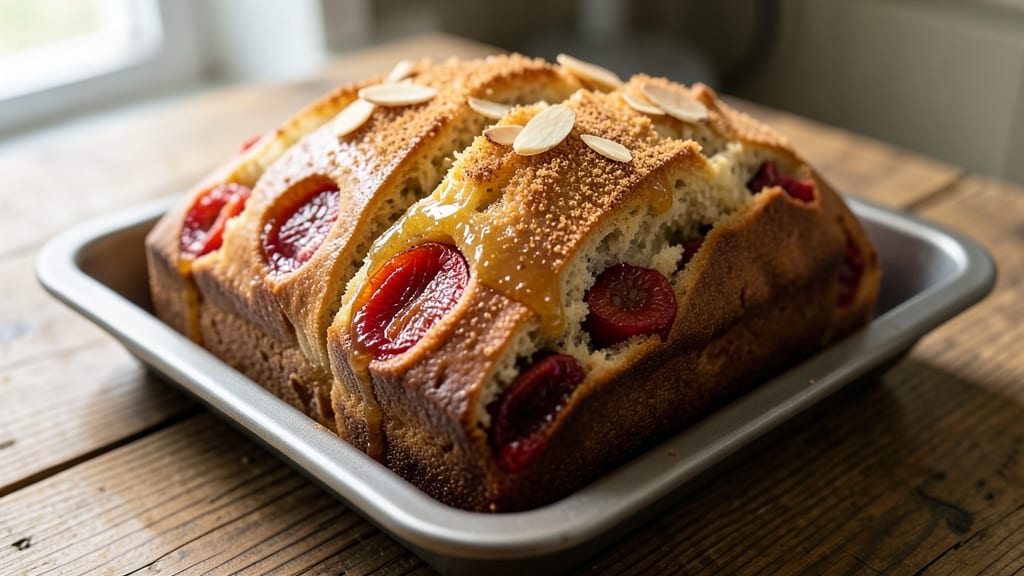
This apricot bread machine recipe transforms your kitchen into a bakery with minimal effort—no kneading required. The bread machine handles all the hard work while you focus on creating a luscious apricot filling that becomes the star of this sweet loaf.
What makes this recipe special is the perfect balance: a tender, slightly sweet bread crust with a gooey apricot center that stays moist for days.
The beauty of using a bread machine lies in its precision—consistent texture, even rise, and foolproof baking every time. You'll start with a simple dough formula enhanced by apricot puree and jam for that signature fruity flavor, then create pockets of filling that bake into golden perfection.
The result is a loaf that smells like a European bakery and tastes even better.
By the time it emerges from the machine, you'll have a crusty exterior with a soft, pillowy interior, all studded with pockets of apricot jam that ooze slightly when sliced.
This bread is ideal for breakfast, dessert, or gifting—its rich apricot flavor pairs beautifully with butter, jam, or even a sprinkle of powdered sugar. The best part? The machine does all the work while you enjoy the process.
Whether you're new to bread machines or a seasoned baker, this recipe delivers restaurant-quality results with just a few ingredients and one simple setting. Let's get started on creating your perfect apricot loaf.
Ingredients for apricot bread recipe for bread machine
These simple yet magical ingredients create a bread machine masterpiece with apricot pockets that ooze deliciousness.
| Ingredient | Amount | Notes |
|---|---|---|
| All-Purpose Flour 🌾 | 3 ½ cups | Spooned and leveled for accuracy |
| Granulated Sugar 🍚 | ¼ cup | White or light brown |
| Instant Yeast 🍞 | 2 tsps | Or 1 packet active dry |
| Unsalted Butter 🧈 | ½ cup | Melted and cooled slightly |
| Large Eggs 🥚 | 1 whole | Room temperature preferred |
| Milk 🥛 | ¾ cup | Whole milk for richness |
| Apricot Jam 🍑 | ½ cup | Seedless, thick consistency |
| Apricot Puree 🍑 | ¼ cup | Homemade or store-bought |
| Salt 🧂 | ½ tsp | Diamond Crystal preferred |
| Vanilla Extract 🌸 | 1 tsp | Pure vanilla for best flavor |
| Ground Cinnamon 🌿 | ½ tsp | Optional for warmth |
| Powdered Sugar 🍚 | 2 tbsp | For dusting finished loaf |
The flour is your foundation—King Arthur or Gold Medal work best for that perfect crumb. For the apricot filling, Smucker's or Bonne Maman jam gives that reliable, thick texture you want. If you're feeling fancy, grab a jar of apricot preserves from Trader Joe's—they're sweeter and more vibrant. The butter needs to be room temperature when measuring, but not melted. I always use Land O'Lakes or Kerrygold for that rich flavor. And trust me, fresh yeast is worth the extra minute—it rises faster and gives a better texture. If you're using active dry yeast, proof it in the warm milk for 5 minutes first.
No apricot jam? Peach jam or apricot preserves will work in a pinch—just thin with a splash of apricot puree if too thick. Out of whole milk? Almond or oat milk works, but the bread might be slightly denser. The vanilla extract can be swapped for vanilla bean paste if you're feeling indulgent. For the flour, if you're gluten-free, King Arthur gluten-free blend works well, though texture will differ. The cinnamon is truly optional, but it adds that cozy bakery feel—skip it if you prefer a more neutral flavor. And if you're worried about the bread being too sweet, reduce the sugar by 1 tbsp and add 1 tbsp of apricot puree instead.
Store the loaf in an airtight container at room temperature for 2 days—it gets even better as the flavors meld. For longer storage, wrap tightly in plastic and refrigerate for up to 5 days. To reheat, wrap in a damp towel and warm in a 200°F oven for 10 minutes. Freezing? Slice first, then freeze individual portions for up to 3 months. The powdered sugar dusting? Only do it right before serving—it melts if stored. And if you make extras, freeze the dough before adding filling—just let it warm up before baking for perfect results.
Why You'll Love This Recipe
- Bread Machine Magic: I swear by my bread machine for this one—just toss in the dough, press start, and walk away. No kneading, no mess, no fuss. The machine handles all the heavy lifting while I sip coffee and pretend I’m not actually baking.
- Sweet Butter Love: That rich, creamy butter mixed with the jammy apricots? It’s like a hug in bread form. The sugar caramelizes just enough to give every slice a subtle, sticky sweetness that pairs perfectly with morning coffee or afternoon tea.
- Breakfast or Snack: Honestly, this bread works for everything. Toast it for breakfast with a smear of the same apricot jam, pack slices for lunch, or serve it warm with butter at dinner. My kids even beg for it as an after-school snack—no judgment here.
- Leftovers That Last: Between us, this loaf disappears fast, but the good news? The leftovers stay fresh for days. I’ll slice it up and freeze portions for quick toast later in the week, or toss a few slices into a lunchbox without worrying about them going stale. Budget-friendly and foolproof.
Step-by-step instructions for apricot bread machine recipe
Your bread machine will do all the hard work—just follow these simple steps for a perfectly moist loaf filled with apricot goodness.
Mix the Dough Ingredients
In your bread machine pan, combine the 3.5 cups all-purpose flour, 0.25 cup granulated sugar, 2 tsps instant yeast, 0.5 tsp salt, and 0.5 tsp ground cinnamon. Give it a quick stir with a wooden spoon to break up any lumps—this ensures even distribution of the dry ingredients.
Next, add the 0.5 cup melted unsalted butter (cooled slightly so it doesn't cook the yeast), 1 whole large egg, 0.75 cup milk, 1 tsp vanilla extract, 0.5 cup apricot jam, and 0.25 cup apricot puree. Mix everything together until you have a shaggy, sticky dough that clumps together. Don't worry if it looks messy—this is normal before the machine kneads it.
Add the Dough to the Machine
Scrape all the dough into your bread machine pan, making sure to get every last bit from the bowl. Wipe down the sides of the pan to remove any stray dough—this prevents sticking during baking. If your machine has a window, you'll see the dough form a rough ball as the kneading begins.
Set your bread machine to the "Basic White Bread" cycle (or "Sweet Bread" if available) and start it. The machine will automatically knead the dough for about 10-15 minutes until it becomes smooth and elastic. You'll know it's ready when it pulls away from the sides of the pan and springs back slightly when poked.
Shape and Fill the Dough
Once the kneading cycle completes, remove the dough from the pan and place it on a lightly floured surface. Gently shape it into a 12-inch log (about 3 inches wide). Use a rolling pin to flatten one side slightly—this creates a flat surface for spreading the filling.
Spread the remaining 0.5 cup apricot jam evenly over the flattened side, leaving a ½-inch border around the edges. This prevents the filling from oozing out during baking. Roll the dough into a tight log, sealing the jam inside. Place it back in the bread machine pan, seam-side down.
Bake to Golden Perfection
Return the dough to the bread machine and select the "Bake" cycle (or "Dough" cycle if your machine has it). Let the machine do its work—it will bake the bread for about 50-60 minutes until the internal temperature reaches 190°F and the crust turns a deep golden brown.
When the cycle finishes, remove the bread from the pan immediately. Let it cool on a wire rack for at least 15 minutes before slicing—this prevents the filling from oozing out and keeps the bread from being gummy. Dust the top with 2 tbsp powdered sugar while still warm for a beautiful finish.
Pro Tips For Making Apricot Bread Recipe For Bread Machine
- SOFTEN THE BUTTER FIRST: I used to just dump cold butter into the bread machine and wonder why my dough stayed dense. Instant yeast needs warmth to activate—soften the butter to room temperature (about 15 minutes out of the fridge) so it blends smoothly with the sugar and eggs. Cold butter creates pockets that won’t rise properly.
- WEIGH THE FLOUR: Scooping flour straight from the bag packs it down, and packed flour means a heavier, denser loaf. Use a kitchen scale and measure by weight (typically 400–450g for this recipe) for consistent results. If you must use cups, spoon the flour into the measuring cup and level it off—no tapping or shaking.
- DON’T OVERLOAD THE FRUIT: Too many apricots (or chunks that are too large) sink like stones and disrupt the dough’s rise. Stick to 1–1.5 cups total, and chop them into small, even pieces—no bigger than ½ inch. If your recipe calls for dried apricots, soak them first to prevent a dry, crumbly texture.
- LET IT REST AFTER KNEADING: The bread machine does most of the work, but giving the dough a 10-minute rest in the pan before baking makes all the difference. This lets the gluten relax and the flavors meld—especially important when you’ve got sweet fruit competing with the yeast. Just cover it loosely with a towel while you wait.
Make-ahead tips for apricot bread recipe for bread machine
Dough Prep Ahead
Mix the dough ingredients up to 24 hours ahead and store them in an airtight container in the fridge. When ready to bake, simply add everything to your bread machine and let it knead and bake fresh.
The cold dough will wake up perfectly—just give the machine an extra 5 minutes of kneading time to account for the chill. 🌟
Filling Prep
Prepare your apricot filling the night before by mixing 0.5 cup apricot jam with 1 tbsp apricot puree and ½ tsp lemon juice to thin it slightly. Store in a small jar in the fridge.
This ensures your filling is smooth and spreadable when you're ready to shape the dough. Pro tip: Warm the filling slightly before spreading for easier application. ✨
Freezer-Friendly Dough
For ultimate convenience, shape and fill the dough, then freeze it completely in the pan (wrapped tightly in plastic wrap). When ready to bake, thaw in the fridge overnight, then pop it in the bread machine on the "Dough" setting for 10 minutes before switching to "Bake".
This method preserves texture and flavor perfectly. ❄️
Storage for Freshness
Store your baked apricot bread in an airtight container at room temperature for 2 days—it gets even more flavorful as the apricot filling softens. For longer storage, wrap tightly in foil and refrigerate for up to 5 days.
To revive stale bread, wrap it in a damp towel and warm in a 200°F oven for 10 minutes. 💡
Portion Control
Slice the loaf into 1-inch thick pieces before freezing for individual portions. Store in a freezer bag with parchment paper between slices to prevent sticking. Thaw overnight in the fridge—no microwave needed! This keeps the bread moist and prevents the filling from leaking. 🍑
Make-Ahead Jam
Simplify your process by making a batch of homemade apricot jam 1-2 weeks ahead. Use 2 cups chopped dried apricots, 1 cup sugar, and ½ cup water, simmered until thickened.
Store in sterilized jars for up to 3 months in the pantry. This ensures you always have fresh filling on hand. 🌿
Nutrition facts
Frequently asked questions
Can I use dried apricots instead of jam or puree?
For a ½ cup apricot puree substitute, blend ½ cup dried apricots with ¼ cup hot water until smooth. For the ½ cup jam, chop ½ cup dried apricots and mix with ¼ cup apricot jam to create a chunky filling. The texture will be slightly different but still delicious.
Why did my bread machine stop kneading early?
This usually happens if the dough is too wet or too dry. Try adjusting your flour by 1-2 tablespoons—add more if sticky, or a little less if too crumbly. Also check your yeast is fresh (it should foam within 5 minutes in warm water). If your machine has a dough weight sensor, ensure the dough meets the minimum requirement.
How do I prevent the apricot filling from leaking?
Leave a ½-inch border of dough around the edges when spreading the filling, and roll tightly to seal it completely. For extra insurance, chill the shaped dough for 15 minutes before baking—this helps the filling set better. If you notice leaks during baking, cover loosely with foil for the last 10 minutes to trap steam.
Can I make this in a stand mixer?
Yes! Mix all ingredients in your stand mixer with a dough hook on low until combined, then knead on medium for 5-7 minutes until smooth. Shape and fill as directed, then bake in a 350°F oven for 40-45 minutes until golden. The texture will be slightly different but still delicious.
What if I don't have apricot puree?
No problem! Blend ½ cup apricot jam with 2 tablespoons water until smooth, or use ¼ cup apricot nectar mixed with ¼ cup water. For a more intense flavor, reduce the sugar in the dough by 1 tablespoon to balance the sweetness. The bread will still be moist and flavorful.