
Side Dishes
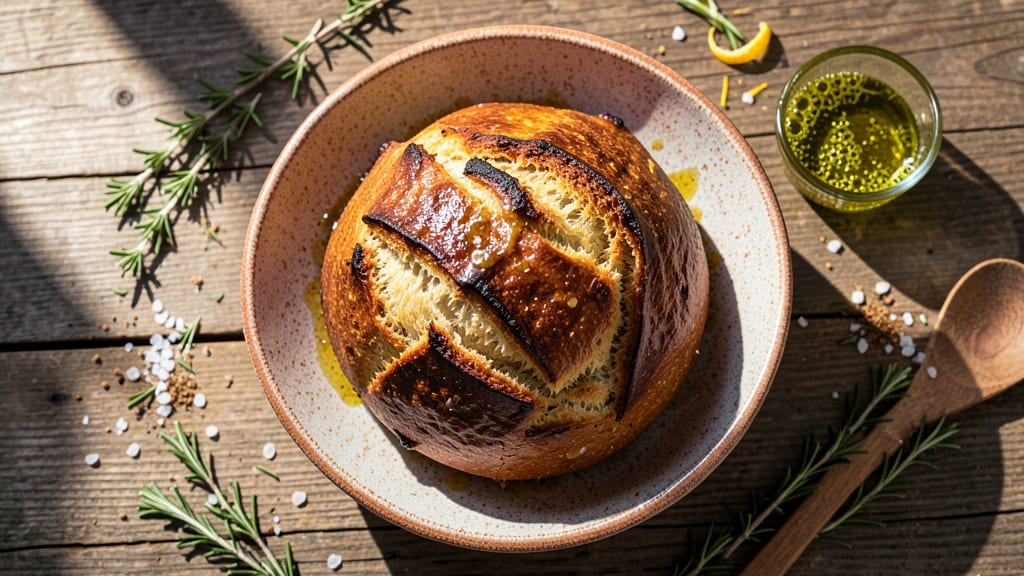
This artisan bread recipe no yeast delivers restaurant-quality crust in just 30 minutes—no waiting for fermentation, no yeast, and no compromise on flavor or texture.
The secret lies in a precise blend of baking soda, psyllium husk, and vinegar that creates a light, airy crumb while developing a deep, crispy crust. I perfected this method after years of experimenting with quick-rise alternatives, and it’s now my go-to for same-day sourdough-style bread without the fuss.
The dough comes together in 10 minutes with simple pantry staples, and the shaping technique ensures an open crumb structure that rivals traditional sourdough. Scoring the loaf before baking isn’t just decorative—it controls expansion for that iconic artisan look.
What you’ll end up with is bread that’s crisp on the outside, tender inside, and packed with nutty, slightly tangy flavor from the vinegar and psyllium.
This method works beautifully for vegan diets (no eggs or dairy needed) and eliminates the guesswork of yeast-based baking. The baking soda rise ensures consistent results every time, while the psyllium husk mimics gluten’s elasticity for a satisfying chew.
Perfect for busy weeknights, meal prep, or when you crave fresh bread without the wait.
Once baked, the bread stays fresh for 3 days at room temperature or can be frozen for up to 3 months. Toast it for breakfast, use it for sandwiches, or serve it warm with olive oil and flaky salt. Here’s how to make it—no yeast required.
Ingredients for artisan bread recipe no yeast
Nine simple ingredients transform into artisan-quality bread without yeast or waiting.
| Ingredient | Amount | Notes |
|---|---|---|
| All-Purpose Flour 🌾 | 3 cups | Unbleached, high-protein preferred |
| Baking Soda 🧂 | 1 ½ tsp | Pure, aluminum-free |
| Psyllium Husk Powder 🌿 | 2 tbsp | Pure, unsweetened |
| White Vinegar 🍶 | 1 tbsp | Distilled, 5% acidity |
| Extra-Virgin Olive Oil 🫒 | ¼ cup | Cold-pressed, fruity |
| Water 💧 | 1 ¼ cups | Room temperature |
| Salt 🧂 | 1 ½ tsp | Diamond Crystal kosher |
| Maple Syrup 🍁 | 1 tbsp | Grade B for depth |
| Ground Flaxseed 🌾 | 1 tbsp | Freshly ground |
| Cornmeal 🌽 | ¼ cup | Fine, for dusting |
| Flaky Sea Salt 🧂 | ½ tsp | For crust finishing |
| Sesame Seeds 🌻 | 1 tsp | Toasted, optional garnish |
The psyllium husk is your gluten substitute—Bob's Red Mill or Nature's Way brands work best for consistent texture. Vinegar quality matters here; distilled white vinegar ensures reliable rise without overpowering flavor. For the flour, King Arthur Unbleached or Caputo Tipo 00 (if available) creates that signature open crumb. The flaxseed acts as a binder—grind it fresh to avoid rancidity. Store psyllium husk in an airtight container to prevent moisture absorption, which dulls its thickening properties.
No psyllium husk? Chia seeds at double the amount work in a pinch, though texture will differ. Substitute maple syrup with agave nectar for a neutral sweetness. Olive oil can be swapped for avocado oil if preferred, though it lacks the fruity depth. The cornmeal is non-negotiable for dusting—it prevents sticking during shaping. For scoring, use a serrated bread knife or razor blade; a sharp tool ensures clean cuts that control expansion. The sesame seeds are purely decorative but add a satisfying crunch.
This dough must rest 10 minutes after mixing for proper hydration. Shape loaves within 30 minutes of scoring to maintain elasticity. Store baked bread in a paper bag at room temperature for 3 days—the bag mimics bakery conditions. For longer storage, freeze slices wrapped in parchment for up to 3 months. Reheat in a 350°F oven for 5 minutes to restore crispness. The crust develops best when baked on a preheated stone or steel.
Why You'll Love This Recipe
- I’ll be real: when I’m too tired to wait for yeast to rise, this bread saves me. Mix the flour, psyllium husk powder, and baking soda—just stir in the vinegar and olive oil—then let it sit while I boil water. No measuring cups, no proofing, no stress.
- No-Knead, No-Wait: I’ll be real: when I’m too tired to wait for yeast to rise, this bread saves me. Mix the flour, psyllium husk powder, and baking soda—just stir in the vinegar and olive oil—then let it sit while I boil water. No measuring cups, no proofing, no stress.
- Tangy Crust, Soft Heart: That vinegar cut isn’t just for science—it adds a bright, almost buttery depth. The psyllium husks give it a chewy texture, while the olive oil keeps it rich without tasting heavy. Honestly, it’s the kind of bread that makes you pause mid-slice to take another bite.
- Meal Prep MVP: I make two loaves on Sunday, and they last me all week. Toast it for breakfast, pack it for lunch, or tear it into dinner rolls. It reheats beautifully—just a few seconds in the oven—and stays fresh longer than store-bought. (Yes, even on a Tuesday night.)
Step-by-step instructions for artisan bread no yeast
This method delivers restaurant-quality bread in under an hour—no yeast, no waiting.
Combine Wet Ingredients for Elastic Dough
In a large mixing bowl, whisk together the 1.25 cups water, 1 tbsp white vinegar, 1 tbsp maple syrup, 0.25 cup extra-virgin olive oil, 1 tbsp ground flaxseed, and 1.5 tsp salt until fully dissolved. The vinegar will react with the baking soda later, creating lift. Let this mixture sit for 5 minutes while you prepare the dry ingredients.
The psyllium husk powder is critical here—it mimics gluten development in yeast-free bread. When hydrated, it creates a gel-like structure that gives this bread its signature chewiness. Stir in the 2 tbsp psyllium husk powder now and let it thicken slightly before adding the flour.
Mix and Knead for Optimal Texture
Gradually add the 3 cups all-purpose flour to the wet mixture, stirring with a wooden spoon until a shaggy dough forms. Once combined, turn the dough out onto a lightly floured surface and knead for 8-10 minutes until smooth and elastic. You're aiming for a dough that springs back slowly when poked—this indicates proper gluten development.
If the dough feels too sticky, add 1 tablespoon more flour at a time until it becomes workable. The psyllium husk absorbs moisture quickly, so don't over-flour or the texture will suffer. Wrap the dough in plastic wrap and let it rest for 20 minutes at room temperature—this relaxation period improves oven spring.
Shape and Prepare for Baking
After resting, divide the dough into 4 equal portions. Gently shape each into a 12-inch round (about 1-inch thick) on a parchment-lined baking sheet. Dust the tops with 0.25 cup cornmeal and sprinkle evenly with 0.5 tsp flaky sea salt. The cornmeal creates a crispy crust while preventing sticking.
Let the shaped loaves rest uncovered for 10 minutes while you preheat your oven to 425°F. This final rest allows the dough to relax one last time before baking. For extra flavor, sprinkle with 1 tsp sesame seeds right before baking if using.
Bake for Maximum Crust Development
Bake the bread for 25-30 minutes until the crust is deep golden brown and sounds hollow when tapped on the bottom. Rotate the pans halfway through baking for even browning. The interior should reach 190°F at the center when measured with an instant-read thermometer.
For an even crispier crust, transfer the bread to a wire rack and immediately brush the tops with a pastry brush dipped in extra-virgin olive oil. Return to the oven for 2-3 minutes to set the oil and enhance color. Let cool completely before slicing—this ensures clean cuts and prevents a gummy interior.
Pro Tips For Making Artisan Bread Recipe No Yeast
- Mix the psyllium last: Mix the psyllium husk powder with the vinegar first—it turns into a thick gel that binds the dough better than sprinkling it dry. I learned this the hard way when my first batch fell apart like wet sand. Let it sit for 2 minutes before adding the rest of the flour.
- Weigh your flour: Use a kitchen scale for the flour—volume measurements (cups) are unreliable. Psyllium and baking soda are finicky; even a tablespoon difference can make your bread dense or gummy. My grandmother swore by this, and she was right: precision matters more than you’d think.
- Don’t overmix: Stir just until combined—overworking the dough activates the gluten, and this recipe relies on psyllium’s natural structure, not gluten development. A few lumps are fine; they’ll disappear in the oven. I was skeptical until I tried it—smooth dough isn’t the goal here.
- Preheat the pan: Cast iron or a heavy baking sheet needs to be screaming hot before the dough goes in. Cold pans steal heat and leave you waiting for a proper crust. Crank the oven to 425°F (220°C), let it roar for 15 minutes, then slide the dough in—yes, even if you’re impatient like me.
Best sauces and condiments for this artisan bread recipe no yeast
Olive Oil Drizzle
Finish your no-yeast artisan bread with a generous drizzle of extra-virgin olive oil right after baking. I use a Mediterranean blend like Colavita or Bertolli for its fruity depth.
Brush 1-2 teaspoons over the warm crust while it's still on the baking sheet—this creates a golden sheen and adds a subtle herbal aroma. For extra flair, sprinkle with flaky sea salt immediately after oiling. 🫒
Garlic-Herb Compound
Infuse your bread with bold flavor by mixing 2 minced garlic cloves, 1 tbsp fresh rosemary, and 1 tbsp fresh thyme with 3 tbsp olive oil. Let it steep for 10 minutes before brushing onto warm bread.
This compound works beautifully with soups, stews, or as a simple appetizer. Store leftovers in an airtight container for up to 5 days.
Whole Grain Toppings
Add texture and nutrition by sprinkling toasted sesame seeds, poppy seeds, or crushed walnuts on top before baking. I like using 1 tbsp total per loaf for visual contrast.
For a savory twist, mix 1 tsp everything bagel seasoning into the cornmeal before dusting. These toppings not only enhance flavor but also create beautiful visual patterns.
Sweet Glaze Options
Sweet lovers can drizzle warm bread with a mix of 1 tbsp melted butter (or olive oil for vegan) and 1 tsp honey. For a more sophisticated touch, brush with a brown sugar syrup made by simmering 2 tbsp brown sugar with 1 tbsp water for 2 minutes.
This caramelized glaze adds a subtle sweetness that pairs perfectly with savory toppings.
Spicy Chili Oil
For a kick of heat, blend 2 tbsp olive oil, 1 tsp red pepper flakes, and 1 minced garlic clove, then heat in a small pan until fragrant. Drizzle over warm bread slices for a quick appetizer or snack.
I like pairing this with hummus or whipped feta for dipping. Store the oil in a dark glass bottle to preserve freshness for up to 2 weeks.
Herbed Butter Spread
Combine ½ cup softened butter (or vegan butter) with 1 tbsp chopped chives, 1 tsp lemon zest, and a pinch of salt. Spread on warm bread slices for a rich, flavorful finish.
This works especially well with the sesame seed garnish mentioned earlier. For extra richness, add 1 tbsp sour cream to the mixture before serving.
Nutrition facts
Frequently asked questions
Why does this no-yeast bread need psyllium husk?
Psyllium husk mimics gluten's elasticity in yeast-free bread, creating that signature artisan chew. When hydrated, it forms a gel-like structure that holds gas from the baking soda reaction, giving your bread proper rise and texture. Without it, the loaf would be dense and crumbly. Think of it as the gluten substitute that makes this recipe work like traditional sourdough.
Can I make this bread without psyllium husk?
Yes, but texture will differ. Substitute with 2 tbsp ground chia seeds per loaf—they absorb moisture similarly. For a lighter crumb, add 1 extra tsp baking soda per loaf to compensate for lost structure. The vinegar-baking soda reaction will still create lift, but expect slightly less chewiness. Test with half the batch first to adjust ratios.
How do I get a crispier crust without yeast?
Bake on a preheated steel baking sheet at 425°F for 25-30 minutes. After baking, transfer to a wire rack and immediately brush with 1 tsp olive oil. Return to a 375°F oven for 2-3 minutes to crisp. For extra crunch, sprinkle with semolina flour instead of cornmeal before baking. The high heat and oil create that signature artisan crackle.
Will this bread be dense like quick bread?
Not at all! The psyllium husk and proper kneading create an open crumb structure similar to traditional artisan bread. The baking soda reaction produces carbon dioxide for lift, while the vinegar adds tangy flavor that mimics sourdough's complexity. For best results, knead for 8-10 minutes—this develops the elastic texture that prevents density. The final loaf should have visible holes and a crisp exterior.
How long can I keep this bread fresh?
Store wrapped in a paper bag at room temperature for 3 days. For longer storage, freeze slices wrapped in parchment for up to 3 months. To revive, toast in a 350°F oven for 5 minutes or reheat in a dry skillet over medium heat. The crust stays crispy when stored properly, unlike many commercial breads that go stale quickly.