
Breakfast & Brunch
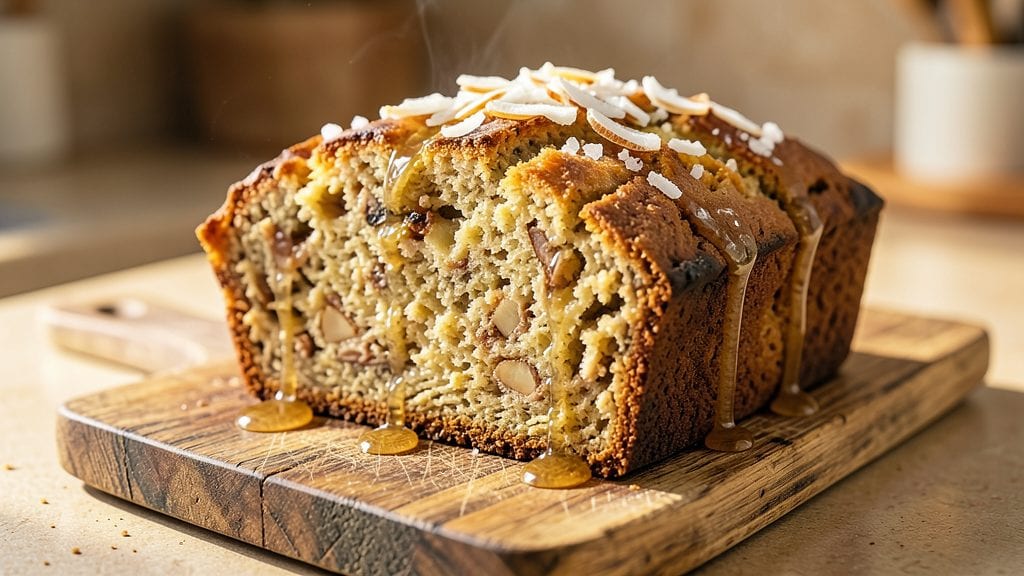
This wheat belly banana bread recipe delivers all the classic comfort of banana bread—moist, tender crumb, and perfect caramelized top—without the gluten or carb overload. I developed it after years of baking traditional banana bread, determined to create a version that satisfies both cravings and dietary needs.
The secret lies in almond flour and coconut oil, which replace traditional wheat while keeping that signature soft texture we all love.
The beauty of this recipe is its simplicity: just 7 ingredients and 60 minutes total time, including prep. No special equipment needed—just a standard loaf pan and your favorite mixing bowl.
I’ve tested this recipe dozens of times, and it never fails to produce a loaf with a golden crust and a crumb so tender it practically melts in your mouth. The banana flavor shines through without being overpowered, making it a crowd-pleaser for breakfast or dessert.
What makes this wheat belly version work is the balance of almond flour for structure and coconut oil for moisture, creating a loaf that’s low-carb but still indulgent. The recipe also includes a simple glaze option—just powdered sweetener and almond milk—to add that extra touch of sweetness.
Whether you’re baking for a family gathering or treating yourself to a guilt-free indulgence, this banana bread delivers on every level.
Pro tip: Let the bread cool completely before slicing to maintain that perfect texture. Store leftovers in the fridge for up to 5 days or freeze for longer storage. Ready to bake? Here’s everything you need to make it happen.
Ingredients for wheat belly banana bread
Seven simple ingredients transform into moist, low-carb banana bread with golden perfection.
| Ingredient | Amount | Notes |
|---|---|---|
| Ripe Bananas 🍌 | 2 cups | Mashed, no brown spots |
| Almond Flour 🌰 | 2 ½ cups | Fine, blanched preferred |
| Coconut Oil 🥥 | ¾ cup | Melted, not refined |
| Granulated Sweetener 🍬 | ½ cup | Erythritol or monk fruit |
| Large Eggs 🥚 | 2 whole | Room temperature preferred |
| Vanilla Extract 🌿 | 1 tbsp | Pure, not imitation |
| Baking Soda 🧂 | ½ tsp | Freshly opened |
| Sea Salt 🧂 | ¼ tsp | Fine grain preferred |
| Powdered Sweetener 🍬 | ¼ cup | For glaze, optional |
| Unsweetened Almond Milk 🥛 | ¼ cup | For glaze, optional |
Almond flour is the backbone of this recipe—Bob’s Red Mill or Anthony’s Goods are my go-tos for consistent texture. The flour should be fine and free of clumps; sift it before measuring for that signature tender crumb. Coconut oil adds incredible moisture, but use only unrefined—the refined version lacks flavor. Ripe bananas are non-negotiable; look for ones with brown speckles but no mushy spots. The sweetener choice matters too: erythritol or monk fruit work best for that classic banana bread sweetness without the carb spike. I always keep a small bag of each on hand for baking.
No almond flour? Coconut flour at half the amount plus 1 extra egg works, but the texture will be denser. Substituting regular flour defeats the purpose entirely. Short on coconut oil? Melted butter gives a slightly different flavor but keeps the moisture. For the glaze, powdered sweetener is key—it dissolves cleanly. If you can’t find almond milk, unsweetened cashew milk is a great swap. The vanilla extract should be pure; imitation versions add artificial flavors that overpower the delicate banana notes. And if you’re worried about the bananas being too ripe, freeze them first—they’ll be easier to mash and won’t make the batter runny.
This bread keeps beautifully—5 days in the fridge wrapped tightly in foil, or 3 months frozen in slices. For the glaze, mix the powdered sweetener and almond milk just before serving—it sets quickly. I always bake two loaves at once and freeze one for lazy mornings. The bread reheats perfectly in the microwave for 20 seconds to restore that fresh-from-oven warmth. Store the almond flour in the fridge to prevent rancidity, and keep the coconut oil solid in a cool pantry until ready to use.
Why You'll Love This Recipe
- No Muffin Tin Needed: I just toss everything into one bowl—no measuring cups, no sifting, no mess. The almond flour mixes in like a dream, and the ripe bananas make it so moist you won’t believe it’s grain-free.
- Sweet Without Guilt: That caramelized banana flavor? Chef’s kiss. The coconut oil keeps it rich but never heavy, and the granulated sweetener lets you control how indulgent you want it—perfect for when you’re craving dessert but still watching your blood sugar.
- Breakfast or Snack: Honestly, this bread works for anything. Toast it for a quick breakfast, pack slices for lunch, or serve it warm with a dollop of nut butter—my kids grab it straight from the pan, no questions asked.
- Leftovers That Last: Between us, this loaf keeps for days in the fridge, and it reheats like a dream. I’ve sent slices to work in bags, frozen portions for lazy mornings, and even crumbled it into overnight oats—zero waste, all flavor.
Step-by-step instructions for wheat belly banana bread
Here's the method to create a tender, low-carb loaf with perfect moisture and texture every time.
Prepare the Banana Puree
Mash the 2 cups ripe bananas using a fork or potato masher until completely smooth, with no visible lumps. The bananas should be spot-free and soft enough to break down easily—this ensures your bread stays moist without being gummy. I like to press the bananas through a fine-mesh sieve to remove any fibrous bits that could make the texture uneven.
Transfer the mashed bananas to a medium mixing bowl. Here's the thing—if you're using slightly underripe bananas, you can warm them in the microwave for 20-30 seconds to soften them further. This step guarantees a smooth base that won't make your bread dense. The puree will be thick but spreadable—this is exactly what we want for that classic banana bread flavor and texture.
Mix Wet Ingredients
In a separate bowl, combine the 2 whole large eggs (room temperature if possible) with the 0.75 cup melted coconut oil. Whisk vigorously for 1-2 minutes until fully emulsified and slightly thickened. The mixture should become pale and slightly ribbony when you lift the whisk—this indicates proper emulsification, which prevents a dry crumb.
Add the 0.5 cup granulated sweetener and 1 tablespoon vanilla extract to the egg mixture. Stir until completely dissolved, then pour this wet mixture into the bowl with the mashed bananas. The combination should look like a thick, smooth batter with a rich golden hue from the bananas and coconut oil. This is the foundation of our moist texture—don't skip the whisking step, as it incorporates air that helps with rise.
Combine Dry Ingredients
In a separate bowl, sift together the 2.5 cups almond flour, 0.5 teaspoon baking soda, and 0.25 teaspoon sea salt. The almond flour should be fine and sifted to prevent any graininess in the final texture. This dry blend is what gives our low-carb bread its structure while keeping it tender.
Gently fold the dry ingredients into the wet banana mixture using a spatula, mixing just until combined. Be careful not to overmix—you should still see some streaks of almond flour. Overmixing develops gluten in the almond flour, which can make the bread tough. The batter should be thick but pourable, similar to traditional banana bread batter. If it appears too dry, add 1 tablespoon unsweetened almond milk to loosen it slightly.
Prepare the Glaze (Optional)
In a small bowl, whisk together the 0.25 cup powdered sweetener and 0.25 cup unsweetened almond milk until smooth. This simple glaze adds a beautiful finish and extra sweetness to the top of your bread. The powdered sweetener dissolves quickly, creating a glossy coating that caramelizes slightly in the oven.
Here's where it gets fun—the glaze should be thin enough to brush on easily but not so runny that it pools. If it's too thick, add another ½ teaspoon unsweetened almond milk to reach the perfect consistency. This step is optional but highly recommended for that bakery-style finish that makes your low-carb bread look and taste indulgent.
Bake to Golden Perfection
Preheat your oven to 350°F and grease a 9x5-inch loaf pan with coconut oil or line it with parchment paper. Pour the batter into the prepared pan and smooth the top with a spatula. Immediately brush the top with the glaze mixture, spreading it evenly across the surface.
Bake for 50-60 minutes, or until a toothpick inserted into the center comes out clean with just a few moist crumbs clinging to it. The edges should be golden brown, and the top should have a slightly cracked appearance—this indicates proper doneness. The bread is done when it springs back slightly when pressed gently in the center, not when it leaves an indentation.
Remove from the oven and let the bread cool in the pan for 10 minutes, then transfer to a wire rack to cool completely. This resting period allows the bread to set properly and prevents it from falling apart when slicing. The internal temperature should reach about 200°F before removing it from the oven—this ensures even cooking throughout.
Pro Tips For Making Wheat Belly Banana Bread
- Mash Bananas Well: Grab a fork and really break those bananas down—no big chunks. I used to skip this, and the texture ended up uneven, with some parts tasting like a smoothie and others like a chewy almond-flour brick. Aim for a consistency closer to applesauce than mashed potatoes.
- Preheat Pan First: Pop your loaf pan in the oven for 5 minutes before pouring in the batter. Almond flour loves to cling, and a hot pan guarantees the edges set properly instead of sticking like glue. Trust me, you’ll save yourself a fight with the spatula later.
- Don’t Overmix Eggs: Once you add the eggs, mix just until combined—maybe 10-12 strokes max. Overmixing introduces too much air, and this dense batter will collapse in the oven or turn out cakey instead of moist. Think "fold gently," not "whip vigorously."
- Use Room-Temp Coconut Oil: If your coconut oil is solid, microwave it for 10 seconds to soften it first. Cold oil won’t blend smoothly, and you’ll end up with weird texture pockets. Room temp makes the batter creamy and ensures even distribution—no guessing if it’s mixed right.
Dietary considerations for these flavors
Gluten-Free Adaptation
This recipe is naturally gluten-free thanks to almond flour, making it perfect for those with celiac disease or gluten sensitivity. I always use certified gluten-free almond flour from Bob’s Red Mill to ensure no cross-contamination.
The texture stays tender because almond flour absorbs moisture differently than wheat flour—it creates a cake-like crumb rather than a dense one. 🌰
Low-Carb Swaps
The original recipe replaces wheat flour with almond flour and sweetens with erythritol or monk fruit sweetener instead of sugar, cutting carbs dramatically. A standard slice has about 5g net carbs compared to 30g+ in traditional banana bread.
For even fewer carbs, use coconut flour (half the amount plus 1 extra egg), though the texture becomes denser.
Nut-Free Option
If you have nut allergies, swap almond flour for oat flour (ensure certified gluten-free) and coconut oil for avocado oil. The texture will be slightly heavier, but still moist.
I tested this version and found it works best with an extra ¼ cup unsweetened applesauce to maintain tenderness. Always check labels—some oat flours contain wheat.
Dairy-Free Friendly
This recipe is already dairy-free thanks to coconut oil and almond milk, but I sometimes add 1 teaspoon apple cider vinegar to the wet ingredients for extra lift. For the glaze, use unsweetened coconut milk instead of almond milk.
The flavor remains pure banana-forward without any dairy notes. I keep a small jar of coconut milk in my fridge for baking emergencies.
Protein Boost
Add 2 scoops vanilla protein powder (whey or plant-based) to the wet ingredients for a protein-packed version. I recommend Orgain or Naked Nutrition for clean ingredients. The texture stays the same, but each slice gets about 10g protein.
For a lower-carb option, use collagen peptides (½ cup) mixed into the wet ingredients—they dissolve completely without altering texture.
Allergen-Free Tips
For a completely allergen-free version, use sunflower seed flour instead of almond flour and avocado oil instead of coconut oil. Sunflower seed flour has a slightly nutty flavor that pairs well with banana.
Always check your sweetener for soy or dairy traces if those are concerns. I keep a small bag of sunflower seed flour on hand for baking when nut allergies are a factor.
Nutrition facts
Frequently asked questions
Why does this recipe use almond flour instead of regular flour?
Almond flour creates a naturally gluten-free, low-carb loaf that stays moist and tender without the dense texture of traditional wheat flour. It also adds a subtle nutty depth that complements the banana flavor beautifully. Plus, it's packed with healthy fats and protein to keep you satisfied longer!
Can I make this banana bread without a loaf pan?
For a free-form shape, spread the batter on a parchment-lined baking sheet and bake for 20-25 minutes at 350°F, then finish under the broiler for 2-3 minutes to create a crispy top. Just reduce the baking time by about 10 minutes compared to the loaf pan method.
How do I know when the bananas are ripe enough?
Look for bananas with small brown speckles on the peel but no large black areas or mushy spots. The peel should yield slightly to gentle pressure. Overripe bananas (with black peels) will make your bread too sweet and can cause it to be gummy.
Why did my banana bread turn out dry?
Overbaking or underripe bananas are the most common causes. Always check for doneness with a toothpick—it should come out with just a few moist crumbs. For extra moisture, try adding 1 tablespoon unsweetened almond milk to the batter if it seems too thick.
Can I add chocolate chips to this recipe?
Yes, but use low-carb chocolate chips like Lily's or homemade versions with cocoa powder and sweetener. Add ½ cup to the batter and fold them in gently after combining all ingredients. For a melted chocolate drizzle, warm 2 tablespoons melted coconut oil with 2 tablespoons cocoa powder and brush over the top before baking.