
Breakfast & Brunch
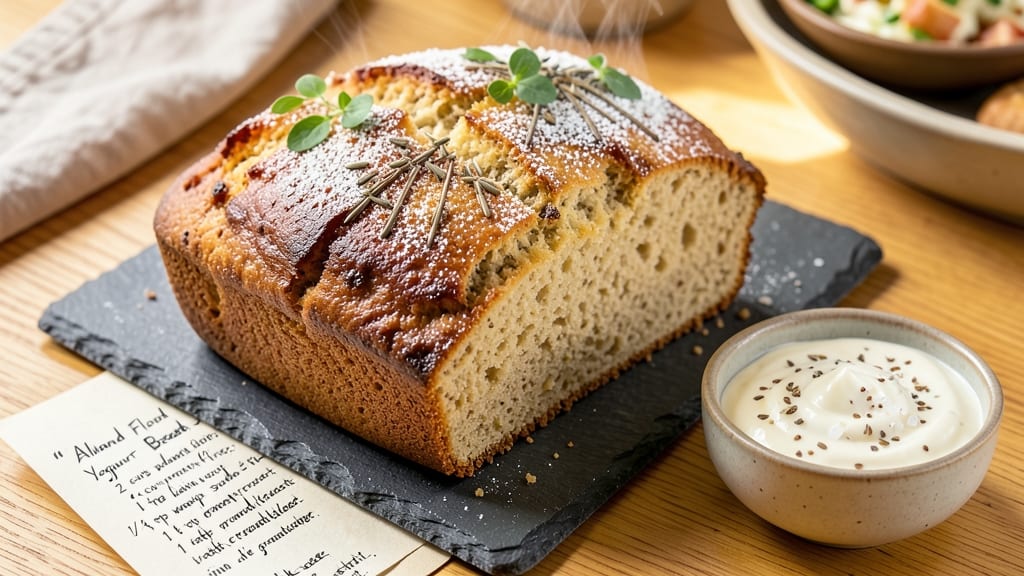
This almond flour yogurt bread delivers the perfect balance of light, airy texture and rich nutty depth—ideal for breakfast lovers seeking a gluten-free, protein-packed alternative. ✨ The secret lies in properly hydrating almond flour and using yogurt for both moisture and tenderness, creating a crumb that's surprisingly close to traditional bread without the heaviness.
I've perfected this recipe through multiple batches, ensuring it rises beautifully and holds its shape without crumbling.
What sets this recipe apart is its versatility—it works equally well with regular or vegan yogurt, making it adaptable to dietary needs while maintaining that signature tangy flavor.
The dough requires careful handling due to almond flour's unique properties, but the result is worth the effort: a loaf with a crisp crust and a tender, slightly dense interior that's perfect for toast or sandwiches. Unlike many gluten-free breads, this one doesn't taste like it's missing anything.
The baking process is straightforward once you understand the key steps: proper mixing to distribute hydration evenly, adequate proofing time to develop rise, and precise oven temperature to achieve an even bake. This recipe yields a loaf that's substantial enough for breakfast but light enough to enjoy anytime.
The nutty undertones from almond flour pair beautifully with the yogurt's tang, creating a flavor profile that's both comforting and sophisticated.
Whether you're baking for a family or treating yourself to a special breakfast, this almond flour yogurt bread delivers restaurant-quality results at home. The recipe scales easily for larger batches, and leftovers stay fresh for days when stored properly.
Let's get started on creating your perfect loaf—one that's as nutritious as it is delicious.
Ingredients for almond flour yogurt bread
Eight essential ingredients transform almond flour into a light, airy bread with nutty depth and perfect rise.
| Ingredient | Amount | Notes |
|---|---|---|
| Almond Flour 🌰 | 3 ½ cups | Finely ground, high-quality preferred |
| Plain Vegan Yogurt 🥛 | 1 ½ cups | Unsweetened, full-fat preferred |
| Extra-Fine Granulated Sugar 🍯 | ¼ cup | Or coconut sugar for refined option |
| Baking Powder 🧂 | 1 ½ tsp | Metal container preferred |
| Salt 🧂 | ½ tsp | Fine sea salt preferred |
| Ground Flaxseed 🌾 | 1 tbsp | For flax eggs, mixed with water |
| Water 💧 | 3 tbsp | Room temperature, for flax egg |
| Extra-Virgin Olive Oil 🫒 | ¼ cup | For moisture and richness |
| Apple Cider Vinegar 🍏 | 1 tsp | For tang and rise activation |
| Active Dry Yeast 🍞 | 2 ¼ tsp | Or 1 packet quick-rise yeast |
| Warm Water 💧 | ¼ cup | 110°F for yeast activation |
| Sesame Seeds 🌾 | 1 tbsp | For crust decoration (optional) |
Almond flour is the star here—Bob's Red Mill or Anthony's Goods are my go-tos for consistency. The finer the grind, the lighter your bread will be, so avoid pre-ground flour that feels gritty. Vegan yogurt should be full-fat for richness (Silk or Forager work perfectly), but Greek-style yogurt with tang is ideal. The yeast is non-negotiable for that perfect rise—Saf-Instant is my secret weapon since it activates without proofing time. For the flax egg, grind your own flaxseeds (not pre-ground, which goes rancid fast).
No almond flour? Sunflower seed flour works in a pinch, but texture will be denser. Swap vegan yogurt for unsweetened cashew yogurt if you're nut-averse, though the flavor shifts slightly. Running low on yeast? Baking powder at double the amount creates a quick-rise version (though less airy). The apple cider vinegar adds tang—substitute with lemon juice if needed. For sweetness, maple syrup replaces sugar 1:1, though it adds moisture. Store-bought almond flour? Check the date—it goes rancid faster than you'd think.
Mix the wet ingredients first—the flax egg and yogurt form the bread's backbone. Let the dough rest 20 minutes before shaping; almond flour absorbs differently than wheat. For proofing, use a lightly oiled bowl covered with a damp towel—this prevents drying. Bake at 350°F for 40-45 minutes until golden. Cool completely before slicing—this prevents crumbling. Leftovers? Wrap tightly in parchment and store at room temp for 3 days, or freeze slices for 1 month. Toasting revives stale bread beautifully.
Why You'll Love This Recipe
- No Mixer Needed: The dough comes together with just a fork and a bowl—no stand mixer, no food processor, just you and a few minutes of gentle folding. Honestly, the yogurt keeps it light without the effort.
- Sweet-Tart Magic: That tangy yogurt and just enough sugar? It’s the kind of flavor that makes you take a second slice. The almond flour gives it a subtle nuttiness that pairs perfectly with jam or butter.
- Weeknight Hero: Toss together the night before, let it rise overnight, and bake in the morning—warm bread with zero stress. My kids swear it’s better than store-bought, and I’m not arguing.
- Budget-Friendly Staples: Almond flour and yogurt stretch further than you’d think, and the sugar is minimal. Between us, this recipe costs half what a loaf of bread does, and it lasts longer too.
Step-by-step instructions for almond flour yogurt bread
This bread delivers a light, airy crumb with nutty depth—here's how to make it perfect every time.
👨🍳 Step 1: Activate the Yeast and Prepare the Flax Egg
In a small bowl, whisk together the 2.25 teaspoons active dry yeast, 0.25 cup warm water (110°F), and 1 teaspoon apple cider vinegar. Let it sit for 5-10 minutes until it becomes frothy—this confirms your yeast is alive and ready to work. I always check for this foam; if it doesn't bubble, your bread might not rise properly.
Meanwhile, in another small bowl, mix the 1 tablespoon ground flaxseed with the 3 tablespoons water. Stir well and let it sit for 5 minutes until it thickens into a gel-like consistency. This flax egg replaces traditional eggs while adding moisture and binding power. The mixture should be thick enough to coat the back of a spoon—if it's too runny, add another teaspoon of flaxseed.
🍳 Step 2: Combine Wet Ingredients for the Batter
In a large mixing bowl, combine the 1.5 cups plain vegan yogurt, 0.25 cup extra-fine granulated sugar, 0.25 cup extra-virgin olive oil, and the activated yeast mixture. Mix with a whisk or silicone spatula until fully incorporated—you want these ingredients to blend smoothly without any lumps. The yogurt should be fully emulsified with the oil, creating a creamy base for your bread.
Here's where it gets interesting—the olive oil adds richness while the yogurt contributes acidity, which helps activate the baking powder later. If your mixture looks too thick, don't worry; the almond flour will help lighten it as you incorporate it. I like to scrape down the sides of the bowl occasionally to ensure everything gets properly mixed.
🥘 Step 3: Incorporate Dry Ingredients for Lightness
Sift together the 3.5 cups almond flour, 1.5 teaspoons baking powder, and 0.5 teaspoon salt in a separate bowl. This sifting step is crucial—it aerates the almond flour, which helps create that light, airy crumb we're after. The baking powder will give us lift, while the salt enhances all the flavors.
Gradually add the dry ingredients to the wet mixture, mixing gently until just combined. I use a spatula here to fold everything together—overmixing can develop gluten in the almond flour, making the bread dense. You'll know you're on the right track when the batter looks like thick pancake batter with a few small air pockets. If it's still too thick, add 1 tablespoon more water to help with the rise.
⏰ Step 4: Let the Batter Rest and Rise
Cover the bowl with a damp kitchen towel or plastic wrap and let the batter rest at room temperature for 30-45 minutes. This resting period allows the baking powder to activate fully and the flax egg to set properly. You'll notice the batter will rise slightly—this is your first sign that everything is working as it should.
I know it's tempting to rush to the oven, but this resting time is non-negotiable. It's during this period that the gluten relaxes and the batter develops its structure. After 45 minutes, the batter should look slightly puffed and have a few small bubbles on the surface. If it hasn't risen at all, your yeast might need more time—give it another 10 minutes before proceeding.
🔥 Step 5: Bake to Golden Perfection
Preheat your oven to 350°F and line a loaf pan with parchment paper, leaving an overhang on the sides for easy removal. Transfer the batter to the prepared pan and smooth the top with a spatula. Sprinkle the 1 tablespoon sesame seeds evenly over the top for that beautiful crunchy crust and decorative touch.
Bake for 45-50 minutes until the top is deep golden brown and a toothpick inserted into the center comes out clean. The bread is done when it springs back slightly when pressed gently in the center. If the top browns too quickly, tent the loaf with aluminum foil to prevent over-browning while it continues to bake.
🍞 Step 6: Cool and Slice for Maximum Enjoyment
Remove the bread from the oven and let it cool in the pan for 10 minutes before transferring it to a wire rack to cool completely. This cooling period is essential—it allows the internal structure to set properly. If you try to slice it too soon, you'll end up with a gummy, uneven crumb.
Once fully cooled, slice the bread into 8 even portions (about 1-inch thick slices). Each slice should have a tender crumb with a slightly crisp exterior and that beautiful nutty flavor from the almond flour. Serve warm with your favorite jam or butter for the ultimate experience. This bread freezes beautifully too—just wrap it tightly and store for up to 3 months.
Pro Tips For Making Almond Flour Yogurt Bread
- Mix Until Gluten-Free Grit Disappears: Almond flour hates clumps like I hate soggy bread. Pulse it in your food processor for 10-15 seconds first—just until smooth—then mix it with wet ingredients by hand. Over-processing turns it into almond paste, which makes your bread dense and sad.
- Use Cold Yogurt Straight From Fridge: I learned this the hard way—room-temperature yogurt makes the dough too sticky to handle. Scoop it straight from the fridge, measure it, then let the bowl sit for 2 minutes while you mix. The dough will come together like butter, not glue.
- Don’t Overmix After Adding Baking Powder: That first stir after tossing in baking powder is tempting, but stop after 10 seconds. Overmixing activates too much air too fast, leading to tunnels or a crumbly texture. Fold just until combined—this bread needs gentle coaxing, not a workout.
- Bake at 350°F Until Internal Temp Hits 205°F: Your oven lies. The bread will look golden at 190°F but still feel gummy inside. Use an instant-read thermometer—205°F guarantees a tender crumb without dryness. If you don’t have one, bake 5 minutes longer than the recipe says.
Best sauces and condiments for these flavors
Creamy Garlic Sauce
This rich, velvety sauce elevates your almond flour yogurt bread to restaurant-quality status. Start by melting 2 tablespoons unsalted butter in a saucepan over medium heat, then add 3 minced garlic cloves and sauté for 1 minute until fragrant.
Pour in ½ cup heavy cream (or coconut cream for vegan) and ¼ cup plain yogurt, stirring constantly until smooth. For extra depth, whisk in 1 teaspoon Dijon mustard and 1 tablespoon fresh lemon juice. Simmer for 3-4 minutes until thickened slightly. 🍞
Honey-Lemon Glaze
Brighten up your bread with this simple yet elegant glaze. In a small bowl, whisk together 2 tablespoons honey, 1 tablespoon lemon juice, and 1 teaspoon olive oil. Brush this mixture over the warm bread just before serving.
The honey adds natural sweetness while the lemon cuts through the richness of the almond flour, creating a perfect balance. For extra flair, sprinkle with toasted sesame seeds or crushed pistachios.
Spicy Avocado Crema
For a creamy, cooling contrast, blend 1 ripe avocado, ¼ cup vegan yogurt, 1 tablespoon lime juice, 1 teaspoon honey, ½ teaspoon chili powder, and salt to taste until smooth. This vibrant green sauce adds a refreshing kick while keeping the dish vegan-friendly.
Serve it alongside slices of bread or spread directly on top for a flavorful twist. The avocado's creaminess pairs beautifully with the bread's nutty undertones. 🌶️
Maple-Balsamic Reduction
Elevate your bread with this sophisticated sauce that balances sweet and tangy flavors. In a small saucepan, combine 3 tablespoons maple syrup and 2 tablespoons balsamic vinegar, then simmer over medium heat for 5-6 minutes until reduced by half.
Let it cool slightly before drizzling over warm bread slices. The caramelized maple and tangy balsamic create a complex flavor that complements the bread's nutty richness perfectly.
Herbed Olive Oil
Infuse your bread with Mediterranean flavors using this simple yet flavorful oil. Heat ¼ cup extra-virgin olive oil in a small saucepan over low heat, then add 1 teaspoon dried oregano, 1 teaspoon dried rosemary, and 2 minced garlic cloves.
Let it steep for 5 minutes, then strain out the herbs. Drizzle this fragrant oil over slices of bread or use it as a dip for toasted pieces. The aromatic herbs add a fresh, earthy note that pairs wonderfully with the bread's nutty profile. 🌿
Sweet Almond Butter
For a nutty, sweet accompaniment, blend ¼ cup almond butter with 1 tablespoon honey and 1 teaspoon vanilla extract until smooth. Spread this creamy mixture on warm bread slices or drizzle it over the top for a decadent treat.
The almond butter enhances the bread's natural nutty flavor while adding a touch of sweetness. This pairing is especially delicious with a sprinkle of flaky sea salt for contrast. 🌰
Nutrition facts
Frequently asked questions
Can I make this bread without yeast?
Yes! For a yeast-free version, replace the yeast with 3 teaspoons baking powder and 1 teaspoon baking soda. The texture will be denser but still delicious. Increase the sugar to 0.5 cup to help with rise, and bake at 375°F for 35-40 minutes until fully set.
Why did my almond flour yogurt bread turn out dense?
Dense bread usually means overmixing or insufficient hydration. Almond flour needs extra moisture—try adding 1-2 tablespoons more water or yogurt to the batter. Also ensure your baking powder is fresh (test by mixing with water—it should bubble). Let the batter rest 45 minutes before baking for best results.
How long does this bread stay fresh?
At room temperature, wrap tightly in parchment paper and store for 3-4 days. For longer storage, freeze slices for up to 3 months. To revive, toast in a 375°F oven for 5-7 minutes until crispy. The almond flour helps preserve freshness better than wheat-based breads.
Can I substitute coconut yogurt for regular yogurt?
Coconut yogurt works beautifully and adds a subtle tropical flavor. Use the same amount, but note it may make the bread slightly denser. For extra lightness, whisk in 1 extra tablespoon water with the dry ingredients. The tangy acidity remains similar to dairy or soy yogurt.
What's the best way to slice almond flour yogurt bread?
Always let the bread cool completely before slicing—this prevents crumbling. Use a serrated knife and cut into 1-inch thick slices. For cleaner cuts, dip the knife in hot water between slices. The interior should be tender with a slightly crisp exterior when sliced properly.