
Sauces & Condiments
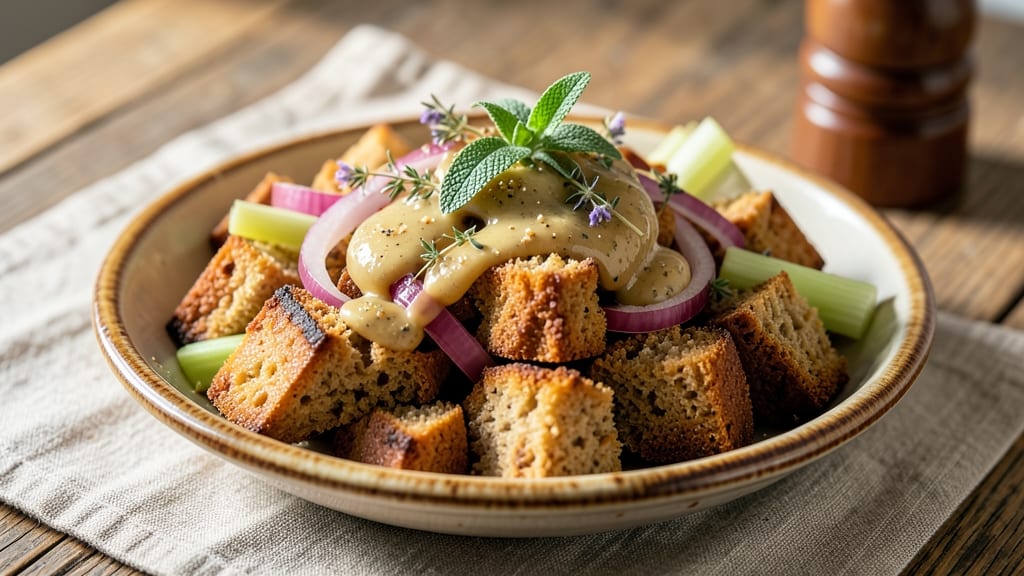
This Amish bread dressing recipe transforms simple ingredients into a rich, herby sauce that elevates roasted meats and stuffings with every spoonful. The secret lies in slow-cooked bread cubes infused with butter, herbs, and aromatic vegetables—creating a velvety, golden dressing that’s both comforting and deeply flavorful.
I developed this version after years of testing, ensuring it delivers that signature Amish homestyle richness without being overly heavy.
The foundation begins with toasted bread cubes—just enough to soak up the savory broth and butter while maintaining a tender texture. Fresh sage, thyme, and parsley bring that classic Amish herb profile, while onions and celery add depth.
The slow simmer transforms these humble ingredients into a dressing so flavorful, it’s the star of any holiday table or weeknight roast. This recipe is designed to be versatile, working equally well as a stuffing dressing, meat baster, or even a dipping sauce for crusty bread.
What sets this dressing apart is its balance—creamy yet not greasy, herby yet not overpowering, and with just the right amount of toasted bread texture. The butter melts into the warm broth, creating a luxurious mouthfeel that pairs beautifully with turkey, chicken, or pork.
For added richness, a touch of chicken broth ensures moisture without diluting the flavor, while a sprinkle of black pepper ties everything together. It’s the kind of dressing that disappears faster than you can say “gravy boat.”
Perfect for holiday meals, Sunday dinners, or anytime you crave that homestyle touch, this dressing comes together in under an hour with minimal effort. The best part? Leftovers reheat beautifully, making it ideal for meal prep.
Whether you’re serving a crowd or simply craving a taste of Amish tradition, this recipe delivers restaurant-quality results with a rustic charm that’s impossible to resist.
Ingredients for amish bread dressing
Toasted bread cubes, rich butter, and aromatic herbs create this velvety dressing perfect for roasted meats.
| Ingredient | Amount | Notes |
|---|---|---|
| Sourdough Bread Cubes 🍞 | 6 cups | Day-old, crust removed, cubed |
| Unsalted Butter 🧈 | ¾ cup | Cold, cubed for even melting |
| Yellow Onion 🧅 | 1 whole | Medium size, diced small |
| Celery Stalks 🥬 | 2 whole | Fresh, diced small |
| Fresh Sage Leaves 🌿 | ½ cup | Chopped, stems removed |
| Fresh Thyme Leaves 🌿 | 1 tbsp | Or 1 tsp dried thyme |
| Fresh Parsley Leaves 🌿 | ¼ cup | Chopped, for brightness |
| Chicken Broth 💧 | 1 ½ cups | Low-sodium preferred |
| Ground Black Pepper 🌶️ | ½ tsp | Freshly cracked |
| Salt 🧂 | 1 tsp | Kosher or sea salt |
The bread is the heart of this dressing—day-old sourdough works best, but French or Italian bread cubes hold up beautifully too. Whole Foods or local bakeries often have perfect slices for cubing. Look for bread with good crust texture; it’ll add depth to the dressing. Toast the cubes until golden—this step is non-negotiable for that signature Amish texture. Costco sells pre-sliced sourdough loaves that make cubing a breeze. If you’re short on time, stale bread from your pantry works just fine—just make sure it’s completely dry before toasting.
No fresh sage? Dried sage at one-third the amount works in a pinch, though fresh brings that authentic Amish flavor. Substitute rosemary for thyme if needed, but the combination of all three herbs is what makes this dressing special. The chicken broth should be low-sodium—Swanson or Pacific Foods brands are reliable. For extra richness, add a splash of white wine or apple cider to the broth. The celery and onion can be swapped for leeks or fennel for a different but equally delicious profile. Just make sure they’re finely diced—small pieces cook faster and blend better into the dressing.
This dressing tastes even better the next day—reheat gently on the stove with a splash of broth or water to restore moisture. Store in an airtight container in the fridge for up to 5 days. For holiday prep, make it a day ahead and reheat before serving. Freeze portions in ice cube trays for easy single-use servings—just thaw and warm through. The texture changes slightly when reheated, but the flavor only improves with time.
Why You'll Love This Recipe
- One-Pot Magic: I swear by this recipe because it’s all in one pan—no chopping boards, no extra bowls. Just toss in the sourdough cubes, softened butter, and those crisp onions and celery, then let the sage perfume everything while it bakes. Honestly? My counters stay cleaner than my kitchen after Thanksgiving.
- Golden Crisp Secrets: That sourdough crust turns perfectly crispy—like little golden pillows—while the inside stays tender. The butter melts into the bread, and the sage? It’s not overpowering, just enough to make every bite feel like a hug. (Yes, even on a Tuesday night.)
- Holiday Side or Main: Serve it warm with roasted chicken and gravy, or let it cool and slice it for sandwiches the next day. I’ve even used it as a base for stuffing when I’m lazy—just add herbs and broth. Works for Thanksgiving, weeknight dinners, or whenever you need something that feels special without the fuss.
- Budget-Friendly Leftovers: Sourdough goes stale fast, but this dressing? It gets better the next day. I make a double batch, freeze half, and pull it out for quick meals later. Plus, using day-old bread means less waste—because nothing (and I mean nothing) should go to waste when butter and herbs are involved.
Step-by-step instructions for homestyle herb and butter bread dressing
This traditional Amish bread dressing delivers rich, buttery layers and aromatic herbs every time.
Sauté the Aromatic Vegetables
In a large skillet, melt the 0.75 cup unsalted butter over medium heat. Add the diced 1 whole yellow onion and 2 whole celery stalks, cooking for 5-7 minutes until the onions become translucent and the celery softens. Stir occasionally to prevent burning.
The butter should foam gently but not brown. If it starts to darken too quickly, reduce the heat slightly. These vegetables form the flavor base, so proper cooking ensures they don't overpower the bread with bitterness. You'll know they're ready when they release their natural sweetness and aroma throughout your kitchen.
Add Herbs and Seasonings
Stir in the 0.5 cup fresh sage leaves, 1 tbsp fresh thyme leaves, and 0.25 cup fresh parsley leaves along with the 1 tsp salt and 0.5 tsp ground black pepper. Cook for an additional 1-2 minutes until the herbs release their fragrance but don't turn crispy. Remove the skillet from heat and let the mixture cool slightly.
Fresh herbs add vibrant color and depth, but they cook quickly. Adding them at this stage ensures they infuse their flavors without losing their delicate essence. The parsley brightens the dish, while sage and thyme provide that classic Amish herb profile. Let the mixture rest for 2-3 minutes before proceeding to prevent steam from making the bread soggy later.
Combine with Bread and Broth
Transfer the herb mixture to a large mixing bowl. Add the 6 cups sourdough bread cubes and gently stir to coat each piece evenly with the butter and herbs. Pour in the 1.5 cups chicken broth, mixing until the bread absorbs most of the liquid but still maintains a slightly moist texture. The dressing should hold together when pressed but not be overly wet.
Sourdough's tanginess pairs perfectly with the rich butter and herbs. The bread should be thoroughly coated but not drowning in liquid—this ensures a tender yet sturdy texture when baked. If the mixture seems too dry, add 1-2 tablespoons more broth to help bind everything together.
Bake Until Golden and Tender
Transfer the bread dressing to a greased 9x13-inch baking dish and spread it evenly. Bake at 350°F for 30-35 minutes until the top is golden brown and the edges begin to crisp slightly. The internal temperature should reach 190°F when tested with a meat thermometer.
Don't overbake—the dressing should be tender but not dry. The golden crust indicates perfect browning, while the internal temperature ensures thorough cooking. If the top browns too quickly, tent loosely with aluminum foil for the last 5-10 minutes of baking to prevent over-browning.
Rest and Serve Warm
Remove the dressing from the oven and let it rest for 10 minutes before serving. This resting period allows the flavors to meld and the juices to redistribute, resulting in a more flavorful bite. Serve warm as a side dish for holiday meals or family gatherings.
The dressing should be moist and fragrant, with each bite offering a perfect balance of buttery richness, herby brightness, and tender bread texture. If the dressing cools before serving, you can reheat it in the oven at 300°F for 10-15 minutes to restore its warmth and texture.
Pro Tips For Making Amish Bread Dressing
- TOAST BREAD LOW AND SLOW: I learned this the hard way—dumping raw sourdough cubes straight into hot butter turns your dressing into a soggy mess. Instead, spread the cubes on a baking sheet and toast them at 300°F (150°C) for 10-12 minutes until dry but not browned. That extra time guarantees they’ll absorb liquid without falling apart.
- CHOP ONIONS SMALLER THAN YOU THINK: Amish dressing relies on onions for flavor, but big chunks mean uneven texture. Dice them into 1/8-inch pieces—small enough to disappear but big enough to hold their shape. (Yes, even if you’re impatient like me, resist the urge to pulse them in a food processor.)
- SAUTÉ CELERY UNTIL TENDER: The celery in this dish isn’t just for crunch—it needs to soften enough to release its flavor. Cook it in the butter until it’s fork-tender, about 5 minutes after the onions start to sweat. Overlooking this step leaves your dressing tasting like a sad, watery salad.
- ADD SAGE IN TWO STAGES: Toss half the sage leaves in with the onions and celery, then reserve the rest to sprinkle on top at the end. The first batch infuses the butter with deep flavor, while the fresh leaves on top add that bright, herbal finish that makes the dish sing. (Trust me, it’s worth the extra handful.)
Regional styles of this amish bread dressing
Pennsylvania Dutch Roots
The Amish bread dressing traces its origins to Pennsylvania Dutch communities in the 18th century, where resourcefulness and simple ingredients created hearty meals. German settlers adapted their traditional bread puddings and stuffings using locally available herbs like sage and thyme—staples in their gardens.
The dressing became a centerpiece during harvest feasts, where it was served alongside roasted meats to soak up juices. 🌾
Early versions often used day-old rye or wheat bread, reflecting the practicality of Amish households. Butter was a precious ingredient, so it was used sparingly but generously in dressings to add richness.
This dressing wasn’t just food—it was a symbol of community and gratitude, shared at gatherings where every bite told a story of tradition and hard work.
Ohio Amish Twist
As Amish communities migrated westward to Ohio in the 19th century, they adapted their recipes to local ingredients. Ohio’s fertile soil produced abundant celery and onions, which became staples in the dressing.
The Ohio version often includes a touch of apple cider vinegar for brightness, a nod to the region’s orchards. This variation keeps the buttery richness but adds a subtle tang that balances the herbs.
In Ohio, the dressing is also commonly used as a stuffing for roasted chickens or turkeys, reflecting the state’s agricultural roots. The texture becomes slightly denser here, almost like a moist bread pudding, which pairs perfectly with Ohio’s famous smoked meats.
Many Amish families in this region still make it in cast-iron skillets passed down through generations.
Texas Hill Country Adaptation
When Amish families settled in Texas’s Hill Country, they incorporated local flavors like jalapeños and cilantro into their dressings. The Texas version keeps the classic herbs but adds a kick of heat—about ½ tsp finely chopped jalapeño—to complement the state’s bold BBQ culture.
The dressing becomes a versatile side for brisket or smoked sausage, bridging Amish traditions with Texan tastes. 🌶️
Texas Amish cooks also often replace some of the chicken broth with beef broth to deepen the savory notes, making it a perfect match for slow-cooked meats. The bread cubes here might include a mix of cornbread and sourdough, reflecting the region’s corn-growing heritage.
This fusion keeps the dressing’s soul intact while giving it a distinctly Lone Star flair.
Modern Homestyle Variations
Today’s cooks often tweak the classic recipe to suit contemporary tastes. A popular variation swaps half the butter for olive oil to lighten the texture while keeping the herby depth.
Some add ¼ cup grated Parmesan cheese at the end for a savory umami boost, inspired by Italian influences in Amish communities. This version works beautifully as a dipping sauce for crusty bread or as a topping for roasted vegetables.
For a vegetarian twist, many use vegetable broth instead of chicken broth and add ½ cup sautéed mushrooms to the onion-celery base. The mushrooms add an earthy richness that mimics the depth of meaty dressings. This plant-based version proves the dressing’s versatility while staying true to its comforting, homestyle roots.
Nutrition facts
Frequently asked questions
Can I make this dressing without butter?
Yes, you can substitute butter with equal parts olive oil or vegetable oil for a lighter version. Use 0.75 cup olive oil instead of butter, and add 1-2 tablespoons extra broth to maintain moisture. The texture will be slightly different but still flavorful—just don't expect the same rich, buttery depth.
How do I prevent the dressing from getting soggy?
Toast the bread cubes thoroughly in a dry skillet until golden before adding them to the dressing. This creates a crisp exterior that holds up better. Also, avoid overmixing after adding the broth—just stir until the bread absorbs most of the liquid but still maintains some structure. If it feels too wet, bake it 5 minutes longer at 350°F.
What's the best bread for this recipe?
Sourdough is ideal, but you can also use French bread, Italian bread, or even cornbread for a Southern twist. Avoid soft breads like brioche—they'll turn mushy. Look for bread with good structure and slightly stale texture (or dry it in the oven for 10 minutes at 300°F if using fresh). The crust should be crisp when toasted.
Can I make this dressing ahead of time?
This dressing actually tastes better the next day. Prepare it up to 2 days ahead and store it in an airtight container in the refrigerator. Reheat in the oven at 300°F for 10-15 minutes, adding 1-2 tablespoons broth or water if it seems dry. For freezing, portion into individual servings and freeze for up to 3 months—thaw overnight in the fridge before reheating.
Why does my dressing taste bland?
Bland flavor usually means one of two things: under-seasoned herbs or insufficient butter. Double-check your herb amounts—fresh herbs should be vibrant green, not wilted. Also ensure the butter is fully melted and incorporated. For extra depth, add 1 teaspoon Worcestershire sauce or ½ teaspoon poultry seasoning to the broth while cooking. Let it simmer uncovered for 5 extra minutes to concentrate the flavors.