
Side Dishes
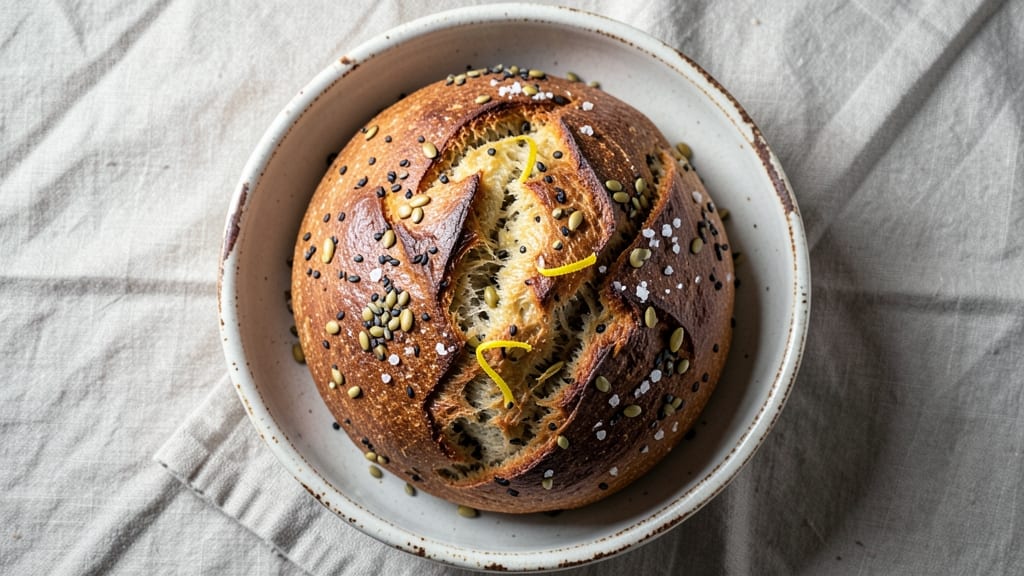
This artisan seed bread recipe delivers a loaf with a nutty crust and airy crumb that rivals bakery favorites. The secret lies in a precise blend of seeds—sunflower, sesame, and flax—that add texture and depth while keeping the dough light and elastic.
I’ve perfected this method over years of baking, ensuring the seeds stay evenly distributed and the bread develops that signature open crumb structure.
The process begins with a hydrated dough that develops gluten gradually, creating a tender yet sturdy crumb. Seeds are mixed directly into the dough, so every slice delivers that satisfying crunch and nutty flavor.
For extra richness, a touch of honey or olive oil enhances the crust, while optional dairy or eggs can be swapped for plant-based alternatives to keep it flexible for dietary needs.
Baking this bread requires attention to steam and scoring—techniques that create that iconic artisan look. The result is a loaf with a golden, crackled crust and a soft, open interior that’s perfect for sandwiches or toast.
The seeds stay crisp, adding both texture and visual appeal, while the crumb remains tender for days.
Whether you’re baking for a weekend brunch or meal prepping, this recipe delivers restaurant-quality results at home. The dough is forgiving, and the method is repeatable, making it ideal for both beginners and experienced bakers. Let’s get started on a loaf that tastes like a trip to your favorite bakery.
Ingredients for artisan seed bread
Precision-mixed ingredients for a bakery-style loaf with signature nutty crust and airy crumb.
| Ingredient | Amount | Notes |
|---|---|---|
| All-Purpose Flour 🌾 | 4 cups | Unbleached, high-protein preferred |
| Sunflower Seeds 🌻 | ¾ cup | Raw, unsalted for even distribution |
| Sesame Seeds 🌿 | ½ cup | Toasted for enhanced aroma |
| Flaxseeds 🌾 | ½ cup | Ground for optimal texture |
| Active Dry Yeast 🍞 | 2 ¼ tsp | Ensure freshness with expiration check |
| Granulated Sugar 🍚 | 1 ½ tbsp | For yeast activation |
| Unsalted Butter 🧈 | ¼ cup | Cold, cubed for even melting |
| Extra-Virgin Olive Oil 🫒 | ¼ cup | High-quality for crust richness |
| Warm Water 💧 | 1 ¼ cups | 105-110°F for ideal yeast activation |
| Salt 🧂 | 1 ½ tsp | Diamond Crystal preferred |
| Honey 🍯 | 1 tbsp | For crust enhancement |
| Cornmeal 🌽 | ½ cup | For dusting baking sheet |
| Large Eggs 🥚 | 1 whole | Optional for enriched dough |
The seeds are the heart of this bread—sunflower, sesame, and flax must be fresh and evenly toasted for optimal texture. Bob’s Red Mill or King Arthur organic seeds work exceptionally well, but any high-quality brand suffices. Toast the sesame seeds separately in a dry pan until golden for maximum aroma. Flaxseeds should be ground just before mixing to prevent clumping. For the flour, King Arthur Bread Flour or Caputo Tipo 00 (if available) elevates the crumb structure, though all-purpose flour delivers consistent results. The yeast must be active—test it in warm water with a pinch of sugar; if it foams within 10 minutes, it’s ready. Butter and olive oil should be cold when mixed to prevent overdevelopment of gluten.
No sesame seeds? Poppy seeds or pumpkin seeds work as substitutes, though flavor will differ slightly. Flaxseeds can be omitted if unavailable, but the bread will lose some crunch and nutritional depth. For a dairy-free version, replace the butter with vegan butter or an additional 2 tbsp olive oil. Honey can be swapped for maple syrup or agave nectar if preferred. If you’re avoiding eggs, the dough will still rise well—just expect a slightly denser crumb. For extra richness, consider adding 1 tbsp of tahini to the dough. Always measure flour by weight for precision, especially in artisan baking where hydration matters.
This dough is best shaped and baked within 4 hours of mixing to ensure optimal gluten development. Store any unused dough in an airtight container in the refrigerator for up to 24 hours, allowing it to come to room temperature before baking. The baked loaf keeps well at room temperature for 2-3 days, wrapped in a clean kitchen towel to maintain moisture. For longer storage, freeze the loaf in slices for up to 3 months—reheat in a 350°F oven for 5-10 minutes to restore freshness. The crust benefits from a quick brush with melted butter or olive oil within an hour of baking for added shine and flavor.
Why You'll Love This Recipe
- No-Knead Magic: I swear by this trick—just mix, let it rise overnight, and bake. The seeds puff up like little flavor bombs while you sleep, and honestly? That’s my kind of effortless win.
- Crunchy Contrast Dream: Sunflower seeds add a buttery nuttiness, sesame seeds bring that toasty crunch, and flaxseeds? They’re sneaky little flavor boosters. Every bite has texture and depth—no sad, dry bread here.
- Weeknight & Picnic Hero: Between us, this bread is my go-to for sandwiches (hello, charcuterie boards), toast, or even as a side for soup. It’s the one loaf that works for lazy mornings and packed lunches—no excuses.
- Budget-Friendly Staple: A single batch feeds my family for days, and the seeds last forever in the pantry. I’m talking $5 loaves that taste like they cost $15. Plus, leftovers? Toast them up—game over.
Step-by-step instructions for artisan seed bread
A perfect balance of nutty crust and airy crumb requires precision timing and technique.
Activate the Yeast and Prepare the Dough Base
In a small bowl, combine the 1.25 cups warm water, 1.5 tbsp granulated sugar, and 2.25 tsp active dry yeast. Let this sit for 5-10 minutes until frothy—you should see bubbles forming on the surface. This confirms your yeast is alive and ready to work. If it doesn't bubble, your yeast may be expired or the water too hot.
In a large mixing bowl, whisk together the 4 cups all-purpose flour and 1.5 tsp salt to distribute evenly. Create a well in the center and pour in the yeast mixture along with the 0.25 cup extra-virgin olive oil and 0.25 cup cold unsalted butter (cubed). The butter should remain mostly solid at this stage to prevent overdevelopment of gluten.
Knead the Dough to Develop Gluten Structure
Using a dough hook attachment on your stand mixer, knead on medium speed for 5-7 minutes until the dough becomes smooth and elastic. You'll know it's ready when it forms a windowpane—stretch a small piece between your fingers and it should thin to translucent without tearing. This gluten development creates the bread's signature airy crumb.
If the dough feels too sticky, add 1 tablespoon flour at a time until it comes together cleanly. Avoid over-kneading, which can make the bread dense. The dough should be slightly tacky but not wet—this ensures proper oven spring during baking.
Incorporate Seeds and First Rise
Remove the dough from the mixer and turn it onto a lightly floured surface. Gently press the dough into a rectangle about ½-inch thick. Sprinkle evenly with the 0.75 cup sunflower seeds, 0.5 cup sesame seeds, and 0.5 cup ground flaxseeds. Fold the dough over itself like a letter, sealing the edges to trap the seeds inside.
Place the dough in a lightly greased bowl, cover with a damp towel, and let rise in a warm place for 1-1.5 hours until doubled in size. The dough should spring back slowly when poked with a finger. This first rise develops flavor and allows the yeast to ferment properly before shaping.
Shape and Proof the Dough
Turn the risen dough onto a lightly floured surface and gently shape it into a 12x6-inch loaf by folding the edges toward the center. This creates tension that helps maintain the loaf's structure during baking. Place the shaped dough seam-side down in a 9x5-inch loaf pan that's been dusted with 0.5 cup cornmeal.
Cover the pan with a towel and let the dough proof for another 30-45 minutes until it rises about 1 inch above the pan's rim. The edges should look slightly puffy, and the dough should feel firm to the touch. This final proof ensures maximum oven spring for that signature artisan height.
Bake to Golden Perfection
Preheat your oven to 375°F with a baking stone or inverted baking sheet on the middle rack. Brush the top of the dough with the 1 whole large egg (beaten) mixed with 1 tbsp honey for a glossy finish. Bake for 30-35 minutes until the bread reaches an internal temperature of 190-200°F and the crust sounds hollow when tapped.
For extra browning, transfer the loaf to the upper rack for the last 5 minutes of baking. The crust should be deep golden brown with visible seed clusters. Let the bread cool in the pan for 10 minutes before transferring to a wire rack to prevent collapsing. The internal crumb should be tender with visible air pockets, while the exterior remains crisp and nutty.
Pro Tips For Making Artisan Seed Bread
- TOAST SEEDS FIRST: Pop your sunflower, sesame, and flaxseeds in a dry pan over medium heat for 2-3 minutes until they smell nutty and fragrant. I learned this the hard way—raw seeds just sit there like dull pebbles in the dough, but toasted ones add real depth. (Yes, even if you’re impatient like me, resist the urge to skip this.)
- WEIGH YOUR FLOUR: Ditch the scooping—use a kitchen scale for the all-purpose flour. A packed cup can add 20-30g extra, throwing off the yeast-to-flour ratio and making your bread dense. I was skeptical until I tried it: the texture became light and airy, like it was actually working with the seeds instead of fighting them.
- DON’T OVERKNEAD: The dough will feel sticky and resistive at first, but stop as soon as it passes the “windowpane test” (stretch a small piece—it should tear, not snap). Overworking it develops too much gluten, which can make the bread tough when mixed with all those seeds. I’ve ruined three batches this way—now I count to 10 after the first tear.
- STEAM THE OVEN: Spray the Dutch oven or baking stone with water and slam the lid on (or cover with foil) for the first 10 minutes. The seeds need that steam to soften and plump up—otherwise, they’ll stay hard and crunchy like overcooked rice. Sounds weird, but it works: the crust gets golden, and the crumb stays tender. (Your future self will thank you.)
Creative variations of this dish
Global Seed Blends
Swap the standard seed mix for regional favorites. In Mediterranean versions, replace sunflower seeds with pumpkin seeds and add toasted pine nuts for a nutty, earthy crunch. For an Asian-inspired twist, use black sesame seeds and white sesame seeds together with a touch of toasted cumin for warmth.
I’ve found that chia seeds (soaked in water) add a gel-like texture that keeps the crumb ultra-tender. 🌍
Herb-Infused Variations
Brighten the dough with fresh herbs before the final rise. Add 1 tbsp chopped rosemary or thyme to the dough for a Provençal-style loaf, or mix in 1 tbsp finely chopped dill and 1 tsp lemon zest for a bright, citrusy variation.
For a savory-sweet combo, fold in 1 tbsp chopped basil and 1 tsp grated Parmesan (or nutritional yeast for vegan). These herbs infuse the crumb while keeping the seeds’ texture intact.
Sweet Seed Loaves
Transform this into a breakfast bread by adding ½ cup raisins or dried cranberries to the dough. For a honey-cinnamon twist, mix 1 tsp cinnamon and 1 tbsp honey into the dough before shaping.
I love baking these as mini loaves (using a muffin tin) for quick toast—brush the tops with maple syrup before baking for extra caramelization. These sweet versions work beautifully with Greek yogurt or ricotta for a brunch spread. 🍯
Gluten-Free Adaptations
Replace the all-purpose flour with a 1:1 gluten-free blend (like King Arthur Measure for Measure) and add ½ cup ground almond flour for structure. Reduce the warm water by ¼ cup—gluten-free doughs absorb less liquid.
For binding, include 1 tbsp psyllium husk powder (mixed with the dry ingredients) to mimic gluten’s elasticity. The seeds will still distribute evenly, though the crumb may be slightly denser. Test small batches first, as gluten-free doughs behave differently. ✨
No-Knead Option
For a hands-off approach, mix the dough as directed but skip the kneading step. Instead, let it rest for 20 minutes before folding in the seeds. After the first rise, shape the dough gently (it’ll be stickier) and proof as usual.
The texture will be slightly less open but still delicious—perfect for busy days. I’ve made this version overnight in the fridge for an easy morning bake. The seeds stay crisp, and the flavor develops deeper from the longer fermentation. 🕒
Nutrition facts
Frequently asked questions
Why do my seeds keep sinking to the bottom of the dough?
The seeds need to be evenly distributed throughout the dough. After pressing the dough into a rectangle, fold it like a letter to trap the seeds inside. For extra security, mix the seeds with a little flour before sprinkling them on. This creates a lighter "seed-flour" blend that stays suspended during kneading.
Can I make this bread without a stand mixer?
Use your hands to knead the dough for 8-10 minutes on a lightly floured surface until it becomes smooth and elastic. Work in a well-ventilated area, as kneading by hand can be tiring. The key is consistency—knead until you can stretch the dough thin without tearing. A dough scraper helps prevent sticking.
What’s the best way to store leftover seed bread?
Wrap the cooled loaf tightly in a clean kitchen towel or place it in an airtight container. It stays fresh at room temperature for 2-3 days. For longer storage, slice and freeze the bread for up to 3 months. To revive frozen slices, warm them in a 350°F oven for 5-10 minutes—they’ll taste almost as fresh as day one!
How do I know when the bread is fully baked?
Your bread is done when the internal temperature reaches 190-200°F and the crust sounds hollow when tapped. Look for a deep golden-brown color with visible seed clusters. If unsure, check the bottom—it should be fully set and not sticky. Overbaking can dry out the crumb, so pull it out just as it passes these tests.
Can I substitute seeds if I don’t have all three?
Yes! Use a 1:1 ratio of any combination—try sunflower and pumpkin seeds for a heartier texture, or sesame and flax for a lighter crunch. For extra flavor, toast your seeds in a dry pan before mixing. Just ensure the total volume remains 2 cups to maintain the bread’s structure and seed-to-dough balance.