
Main Courses
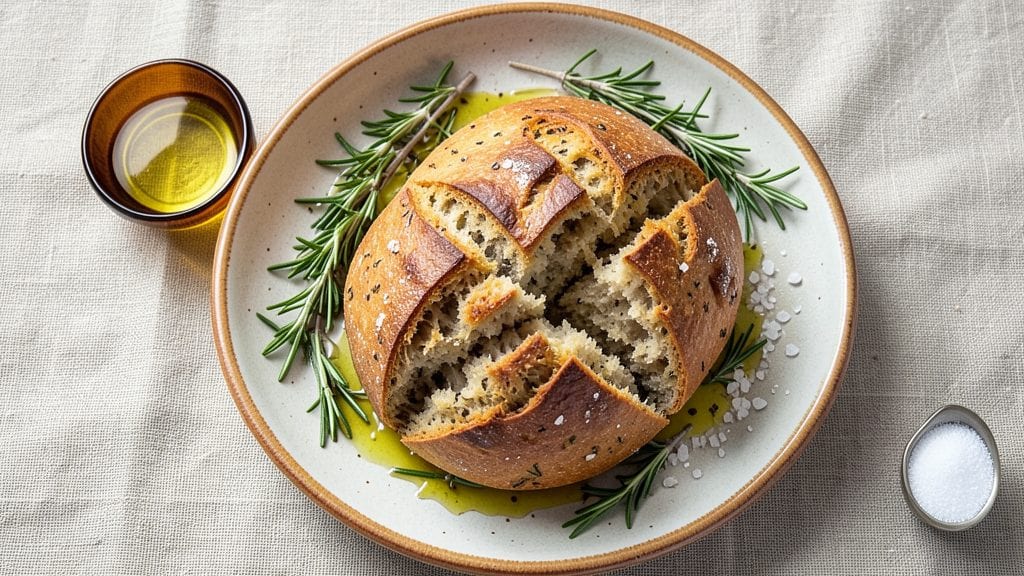
This herbed bread recipe transforms your kitchen into a rustic bakery with just a few simple ingredients and a little patience.
The secret lies in the fragrant herb crust, where rosemary and thyme infuse the dough with an aroma that fills your home long before the bread emerges golden from the oven.
I perfected this recipe after years of experimenting with store-bought loaves that simply couldn't compete with homemade texture and flavor.
The process begins with a basic bread dough that's elevated by fresh herbs mixed directly into the crust before baking. This isn't just any bread—it's a foolproof method that yields a crust with perfect crispness and a crumb so tender it practically melts in your mouth.
The herbs develop their full aromatic potential during the final minutes in the oven, creating that signature bakery-fresh scent that makes this bread irresistible.
What you'll achieve is a loaf with a fragrant herb crust that's both visually stunning and packed with flavor, paired with a soft, airy interior that's perfect for sandwiches or serving alongside soups.
The best part? This recipe delivers professional-quality results without requiring specialized equipment—just a standard loaf pan and your patience for the proofing process.
Whether you're preparing for a family dinner or simply craving freshly baked bread, this recipe transforms simple ingredients into something extraordinary. The herbs not only enhance the flavor but also create a beautiful, aromatic crust that makes every slice feel like a special occasion.
Let's get started on creating your perfect loaf.
Ingredients for herbed bread
Fresh herbs and simple pantry staples create a bakery-worthy loaf with crisp crust and fragrant aroma.
| Ingredient | Amount | Notes |
|---|---|---|
| All-Purpose Flour 🌾 | 4 cups | Spooned and leveled, not scooped |
| Instant Yeast 🍞 | 2 ½ tsp | Freshly opened for best rise |
| Granulated Sugar 🍚 | 1 tbsp | For yeast activation |
| Salt 🧂 | 1 ½ tsp | Kosher or sea salt preferred |
| Warm Water 💧 | 1 ¼ cups | 110°F for yeast activation |
| Extra-Virgin Olive Oil 🫒 | ¼ cup | For soft, tender crumb |
| Fresh Rosemary 🌿 | 2 tbsp | Finely chopped, stems removed |
| Fresh Thyme 🍃 | 1 ½ tbsp | Leaves only, finely chopped |
| Coarse Sea Salt 🧂 | 1 tbsp | For sprinkling on crust |
| Cornmeal 🌽 | ½ cup | For dusting loaf pan |
| Large Egg 🥚 | 1 whole | For egg wash |
| Milk 🥛 | 1 tbsp | For egg wash richness |
The herbs make or break this bread. Fresh rosemary and thyme from the grocery store's produce section (not the dried spice aisle) give the best flavor—look for bright green, vibrant leaves. If you're using dried, double the amount, but fresh is absolutely essential for that signature aroma. I always grab mine from Whole Foods or my local farmers market—they keep better in the fridge wrapped in damp paper towels. For the flour, King Arthur or Gold Medal brands are my go-to—they've got the right protein for a tender crumb without being too heavy.
No fresh rosemary? Substitute 1 tbsp dried rosemary, but it won't be the same—those dried leaves lose so much flavor. Short on thyme? Oregano or basil can work in a pinch, but thyme's piney note is key here. The olive oil is non-negotiable—extra-virgin makes all the difference. If you're out, avocado oil works too, but it lacks that fruity depth. For the yeast, if it's been sitting in your pantry for months, test it first—mix 1 tsp yeast with 1 tsp sugar and 1/4 cup warm water. If it doesn't foam in 5-10 minutes, it's dead and needs replacing.
This dough needs time to rise properly—at least 1 hour for the first rise, then another 45 minutes after shaping. Don't rush it! The herbs release their oils during baking, so preheat your oven to 375°F and let it sit for 15 minutes before baking. Store leftovers in a paper bag at room temperature for up to 3 days—it keeps best that way. For freezing, slice the loaf before wrapping in foil—up to 3 months in the freezer. Reheat slices in a toaster or oven for that fresh-baked taste.
Why You'll Love This Recipe
- Pantry Staples Only: I swear by this recipe because it uses what’s already there—no specialty flours or fancy yeast packets. Just flour, sugar, and yeast from the cabinet, mixed with warm water and a handful of dried herbs. Honestly, I’ve made it three times this week, and every time it’s been foolproof.
- No-Knead Magic: Between us, I’m not the kneading type. This dough comes together in minutes, rests while you sip coffee, and rises effortlessly. The texture? Chewy yet airy, with that perfect crust that doesn’t require a bread machine or my questionable elbow grease.
- Weeknight Hero: This is my go-to when I forget to meal prep. Toss a loaf in the oven for 30 minutes, and suddenly you’ve got dinner for sandwiches, toast, or even a quick charcuterie board. (Yes, even on a Tuesday night when takeout feels like a chore.)
- Budget-Friendly Staple: A single batch feeds my family for days—leftovers turn into croutons, garlic bread, or even breadcrumbs for future recipes. I’ll be real: it’s cheaper than buying store-bought, and the herbs make it taste like I actually put in effort. (Spoiler: I didn’t.)
Step-by-step instructions for herbed bread recipe
Here's how to create a fragrant, golden loaf with a crisp herb crust that'll make your kitchen smell amazing.
Activate the Yeast and Mix the Dough
In a large bowl, combine the 1.25 cups warm water (about 110°F) with the 1 tbsp granulated sugar and 2.5 tsp instant yeast. Let it sit for 5-10 minutes until it becomes foamy and bubbly—this means your yeast is alive and ready to work. If it doesn't foam, your yeast might be old, and you'll need to start over.
In a separate large mixing bowl, whisk together the 4 cups all-purpose flour and 1.5 tsp salt. Make a well in the center and pour in the yeast mixture along with the 0.25 cup extra-virgin olive oil. Using a wooden spoon or dough whisk, stir until everything just begins to come together. Here's the thing—you don't want to overmix yet, or you'll develop too much gluten and lose that tender crumb we're after.
Once the dough starts forming, switch to your hands and knead it on a lightly floured surface for about 5 minutes until smooth and elastic. The dough should be slightly tacky but not sticky—if it sticks too much, sprinkle a little more flour. Fold in the 2 tbsp finely chopped fresh rosemary and 1.5 tbsp finely chopped fresh thyme, pressing them into the dough so they're evenly distributed.
First Rise and Shape the Loaf
Lightly grease a large bowl with olive oil and place the dough inside. Cover it with a clean kitchen towel or plastic wrap and let it rise in a warm place for 1 to 1.5 hours, or until it has roughly doubled in size. You'll know it's ready when you gently press a finger into the dough and it springs back slowly—this tells you the gluten has relaxed and the yeast has done its job.
While the dough rises, preheat your oven to 375°F. Line a 9x5-inch loaf pan with parchment paper and dust it lightly with 0.5 cup cornmeal. This prevents sticking and gives the crust that beautiful texture. Punch down the risen dough to release any air bubbles, then transfer it to your work surface and gently shape it into a loaf by folding the edges toward the center and rolling it toward the pan.
Place the shaped dough into the prepared loaf pan, seam-side up. Cover it again and let it rise for another 30 to 45 minutes until it's just about overflowing the pan. This second rise ensures a light, airy texture. Real talk—don't skip this step. Skimping on rise time leads to dense bread that falls flat.
Prepare and Bake the Herb Crust
In a small bowl, whisk together the 1 whole large egg, 1 tbsp milk, and a pinch of salt. This will be your egg wash for that golden, glossy crust. Brush the risen dough in the pan with half of this mixture, then sprinkle the 1 tbsp coarse sea salt evenly over the top. The salt will caramelize during baking, creating beautiful flecks of crunch.
Bake the bread in the preheated oven for 30 minutes. After 20 minutes, brush the top with the remaining egg wash and sprinkle any remaining herbs on top if you like. The bread is done when it's deep golden brown and sounds hollow when you tap the bottom. If it's browning too quickly, tent it loosely with foil to prevent over-browning.
For that perfect herb crust, here's what I do: After removing the bread from the oven, immediately invert it onto a wire rack. Let it cool for 10 minutes before slicing—this resting time allows the steam inside to escape, preventing a gummy texture. The crust should be crisp and fragrant with rosemary and thyme, while the interior remains soft and pillowy.
Pro Tips For Making Herbed Bread
- Test Yeast First: Mix 1 teaspoon instant yeast with 2 tablespoons warm water and 1 teaspoon sugar in a separate bowl. If it doesn’t bubble within 5 minutes, your yeast is dead—start over. I learned this the hard way when my entire loaf turned out flat and dense because I skipped this step.
- Measure Flour Right: Use a kitchen scale for the flour—spoon it in, then level it off. Cup-and-scoop packing compresses the flour, making your bread denser. I was skeptical until I tried it; the difference in texture is noticeable.
- Don’t Over-Knead: Stop kneading once the dough springs back slowly when poked (about 5-7 minutes by hand). Overworking it develops too much gluten, making the bread tough. After burning three batches, I finally figured out "just until" is the magic phrase.
- Brush With Water: Before baking, lightly brush the shaped dough with warm water. This helps the herbs stick and creates a shinier, more professional-looking crust. Sounds weird, but it works—your future self will thank you.
Perfect pairings for this dish
Buttery Spread Pairings
This fragrant herb bread is a match made in heaven with herb-infused butter.
I like to mix ½ cup softened butter with 1 tbsp finely chopped fresh rosemary, 1 tsp lemon zest, and a pinch of flaky sea salt, then spread it warm on freshly sliced bread.
For something richer, try garlic-herb butter—mash 2 cloves roasted garlic into ½ cup butter with 1 tbsp chopped parsley and ½ tsp black pepper. 🧈
Soup Companions
Serve this bread alongside roasted tomato soup or creamy butternut squash soup to soak up every last drop. I love pairing it with French onion soup—the crisp crust contrasts beautifully with the caramelized onions.
For a lighter option, try minestrone soup—the herbed bread adds a fresh, aromatic element to the hearty vegetables. 🍲
Cheese Board Essentials
Create an elevated cheese board by pairing this bread with aged cheddar, brie, and goat cheese. The rosemary and thyme in the crust cut through the richness of the cheese, while fig jam or honey adds a sweet contrast.
For a Mediterranean twist, include feta, olives, and marinated artichokes—the herbed bread ties everything together perfectly. 🧀
Breakfast Pairings
Transform your breakfast with this bread as a side for scrambled eggs with chives or shakshuka. Toast a slice and top it with avocado mash, crumbled bacon, and a drizzle of hot honey for a hearty meal.
I also love serving it with Greek yogurt and homemade jam for a lighter, brunch-worthy option. 🍳
Dinner Sandwiches
Make herbed bread sandwiches with prosciutto, mozzarella, and roasted red peppers for a quick Italian-inspired meal. For a vegetarian option, layer hummus, sliced cucumber, and tomato between two slices.
The crisp crust holds up perfectly to grilled sandwiches—try grilled cheese with tomato soup for a cozy classic. 🥪
Wine and Beer Pairings
Pair this bread with a dry white wine like Sauvignon Blanc—its citrus notes complement the herbs beautifully. For beer lovers, a crisp lager or witbier cleanses the palate between bites. If you prefer red, a light Pinot Noir works well with the rosemary and thyme. 🍷
Nutrition facts
Frequently asked questions
Can I substitute dried herbs for fresh in this recipe?
Fresh herbs are ideal for the best flavor, but you can use dried if needed. For rosemary, use 1 teaspoon dried (about 1/3 the fresh amount), and for thyme, use 1 teaspoon dried. Remember, dried herbs are more concentrated, so start with less and adjust to taste. The aroma won't be as vibrant, but it'll still work in a pinch.
Why did my bread turn out dense instead of light and airy?
Dense bread usually means the dough didn't rise enough. Make sure your yeast is active (test it in warm water with sugar first), and let the dough rise in a warm spot for the full 1-1.5 hours until it doubles in size. Also, avoid over-kneading—the dough should be soft and slightly tacky, not tough. If your kitchen is cold, try placing the dough near a turned-off oven with the light on for warmth.
How can I make this bread without a loaf pan?
Shape the dough into a round or oval and place it on a parchment-lined baking sheet. Brush with egg wash and sprinkle with salt, then bake as directed. For a rustic look, score the top with a sharp knife before baking. The crust will be slightly different but still fragrant and delicious. This works great for free-form boules or batards.
Can I add other herbs or spices to this recipe?
Try adding 1 teaspoon dried oregano or ½ teaspoon red pepper flakes for warmth, or swap thyme for parsley or basil for a different flavor profile. Just keep the total herb amount to about 3-4 tablespoons to avoid overpowering the dough. Experiment with combinations like rosemary + sage or thyme + lavender for unique twists.
How long does this bread stay fresh, and how should I store it?
Store wrapped in a paper bag at room temperature for up to 3 days to maintain freshness. For longer storage, slice the loaf, wrap tightly in foil, and freeze for up to 3 months. To reheat, toast slices in a toaster or warm in a 350°F oven for 5-10 minutes until crispy. Avoid plastic bags—they trap moisture and make the crust soggy.